
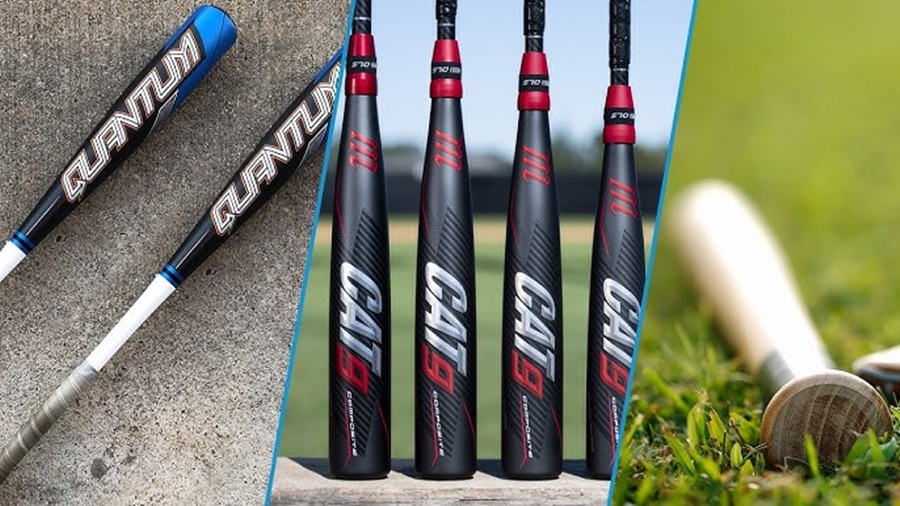
Baseball bats play a critical role in a player’s performance, and the choice of bat can significantly influence hitting power, control, and overall feel at the plate. Among the most common options are aluminum (metal) bats and wood bats. Each type has distinct characteristics, advantages, and limitations that make it suitable for different levels of play and player preferences. This article provides a detailed comparison of aluminum and wood baseball bats to help players, coaches, and parents make informed decisions.
1. Material and Construction
Aluminum bats are made from aluminum alloys or composite metals. They are often hollow inside, which allows manufacturers to engineer features such as thin walls and large barrels for improved performance. Some modern aluminum bats also incorporate composite materials to enhance durability and reduce vibration.
Wood bats, on the other hand, are made from natural hardwoods such as maple, ash, or birch. Each type of wood offers a slightly different balance of flexibility, hardness, and weight. Wood bats are typically solid and have a traditional, simple construction with no internal engineering.
2. Performance and Power
One of the most noticeable differences between aluminum and wood bats is performance.
- Aluminum bats generally provide greater hitting power. The hollow design creates a “trampoline effect,” where the bat flexes slightly upon contact and transfers more energy to the ball. This often results in higher exit velocity and longer hits, especially for developing players.
- Wood bats rely entirely on the player’s strength, timing, and technique. There is no trampoline effect, so hits may not travel as far unless the ball is struck cleanly on the “sweet spot.”
As a result, aluminum bats are often favored in youth and amateur leagues, while wood bats are standard at professional levels.
3. Sweet Spot and Forgiveness
The sweet spot is the area of the bat that produces the best contact with minimal vibration.
- Aluminum bats typically have a larger sweet spot, making them more forgiving on off-center hits. This helps players achieve solid contact even when their swing mechanics are still developing.
- Wood bats have a smaller sweet spot. Mis-hits can result in weak contact, painful vibrations in the hands, or even broken bats.
This difference makes aluminum bats more user-friendly for beginners and younger players.
4. Durability and Lifespan
Durability is another key distinction.
- Aluminum bats are highly durable and resistant to breaking. While they may dent or crack over time, they usually last much longer than wood bats under regular use.
- Wood bats can break, crack, or splinter, especially when the ball is hit near the handle or end of the bat. Maple bats are harder but more brittle, while ash bats tend to flex more before breaking.
Players who frequently practice or play multiple games may find aluminum bats more cost-effective in the long run.
5. Weight and Balance
- Aluminum bats are often lighter and can be designed with balanced or end-loaded weight distributions. This allows players to swing faster and with less fatigue.
- Wood bats are generally heavier for the same length and require more strength to swing effectively. The weight distribution is fixed and depends on the wood type and bat design.
Stronger, more experienced players often appreciate the solid feel of wood bats, while lighter aluminum bats help younger players develop bat speed.
6. Feel, Sound, and Feedback
The sensory experience differs greatly between the two bat types.
- Aluminum bats produce a distinctive “ping” sound upon contact. Vibrations are often dampened through design features, which reduces sting in the hands.
- Wood bats create a classic “crack” sound that many players and fans associate with traditional baseball. They also provide more direct feedback, allowing players to feel exactly where the ball was struck on the bat.
This feedback can be valuable for improving hitting mechanics.
7. League Rules and Regulations
Bat choice is often dictated by league rules.
- Aluminum bats are commonly allowed in youth leagues, high school baseball, and many collegiate leagues, often with specific certification standards.
- Wood bats are required in professional leagues and are increasingly used in some collegiate summer leagues to prepare players for the professional level.
Before purchasing a bat, it is essential to check league regulations.
8. Cost Considerations
- Aluminum bats generally have a higher upfront cost but last longer, making them economical over time.
- Wood bats are cheaper per bat but may need frequent replacement due to breakage.
Players who prefer wood bats often buy them in bulk to reduce overall costs.
9. Skill Development and Training
Many coaches believe that wood bats help players develop better hitting fundamentals. The smaller sweet spot encourages precise contact and proper swing mechanics. Aluminum bats, however, can boost confidence and performance, especially for younger players still building strength.
As a result, some players train with wood bats and compete with aluminum bats.
Conclusion
Both aluminum and wood baseball bats have unique advantages and serve different purposes in the game. Aluminum bats offer power, durability, and forgiveness, making them ideal for youth and amateur players. Wood bats provide tradition, skill development, and a pure hitting experience, which is why they remain the standard at the professional level.
The best choice ultimately depends on the player’s age, skill level, league rules, and personal preference. Understanding the differences between aluminum and wood bats allows players to select the bat that best supports their development and enjoyment of the game.



Leave a Reply