
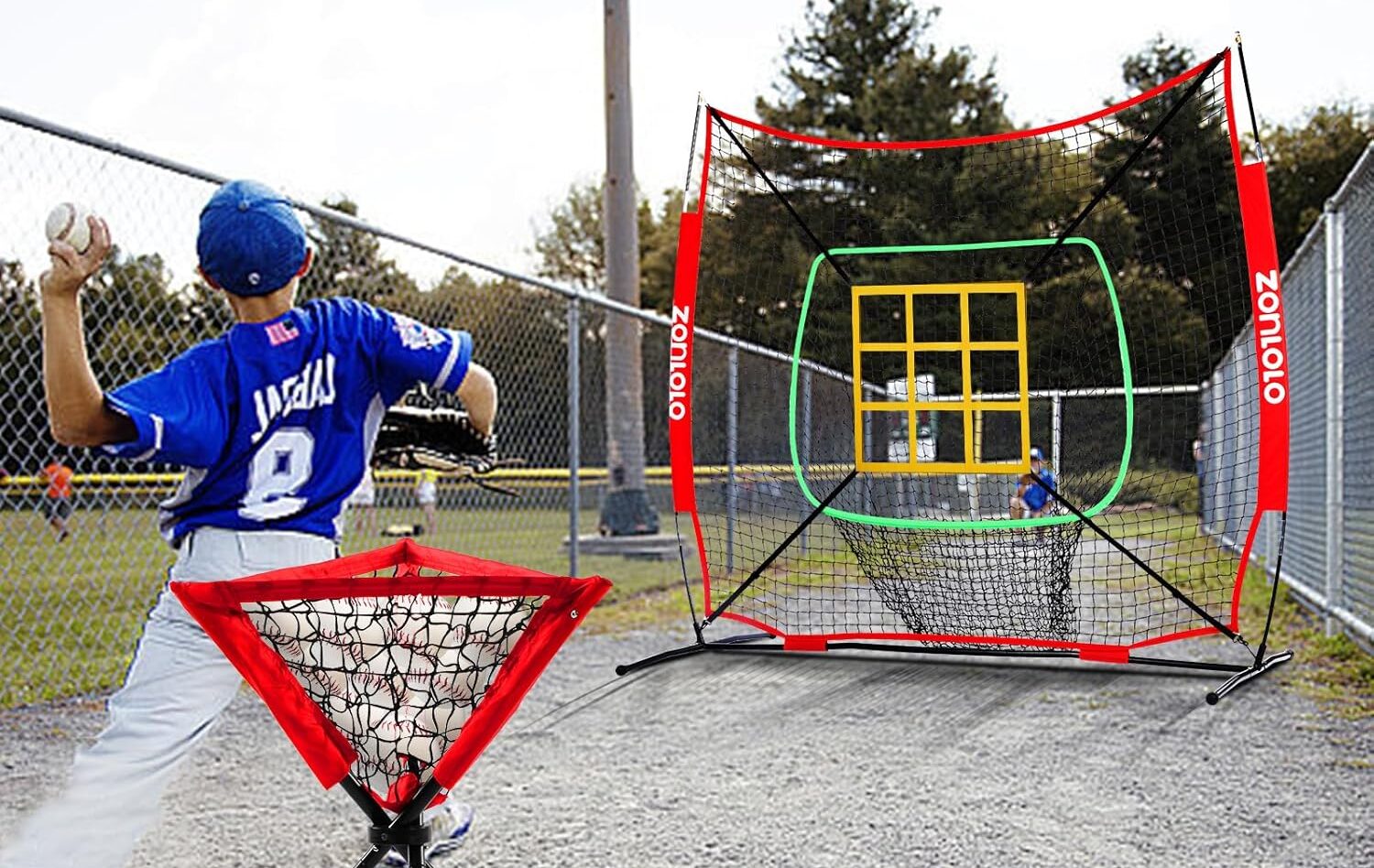
I went into this thinking “a net is a net,” and… yeah, no. Some nets are built for actual reps (hard hits, quick resets, stable frames). Others feel like they’ll fold the moment a kid tops one into the side panel.
Before we get into the picks, here are the buying questions that will save you from getting the wrong net.
Quick Buying Questions (Ask These Before You Buy)
- Who’s using it—kids, teens, adults, or mixed?
A 6×6 net is usually plenty for kids and tight spaces. If you’ve got bigger hitters or mixed ages, 7×7 feels less cramped. - Do you want a strike zone or targets—or just a big open net?
If you’re working on pitching accuracy or hit placement, targets matter. If you’re just trying to get swings in without chasing balls, a clean open net with a good pocket is fine. - Where will you set it up most—backyard, garage, field, driveway?
Bow-style bases tend to be stable on mixed surfaces. If you’re indoors a lot, footprint and setup speed matter more than stakes. - How “wild” are the misses in your house?
If you’ve got beginners spraying balls everywhere, a net with a blocking/cage-style surround can seriously reduce chasing and accidental damage. - Do you want an all-in-one kit or just the net?
Bundles with a tee and ball caddy are convenient, but they weigh more and take more space in storage.
Types of Hitting Nets (What You’re Actually Shopping For)
| Type | What it’s best for | What to watch out for |
|---|---|---|
| Standard bow-frame practice net (6×6) | Everyday hitting + pitching reps, easy setup | Less forgiving on wide misses |
| Strike-zone net | Pitching command + consistent target work | Pocket size/target visibility varies |
| Multi-target accuracy net | Working corners, hit location, throwing drills | More “busy” face can reduce open hitting area |
| All-in-one kit net (net + tee + caddy) | Families and backyard setups that want everything in one box | Heavier, more pieces to store |
| Blocking/cage-style net | Wild throws, new hitters, tight neighborhoods | Bulkier and not as quick to move |
Our Top Picks by Category
| Category | Top Pick |
|---|---|
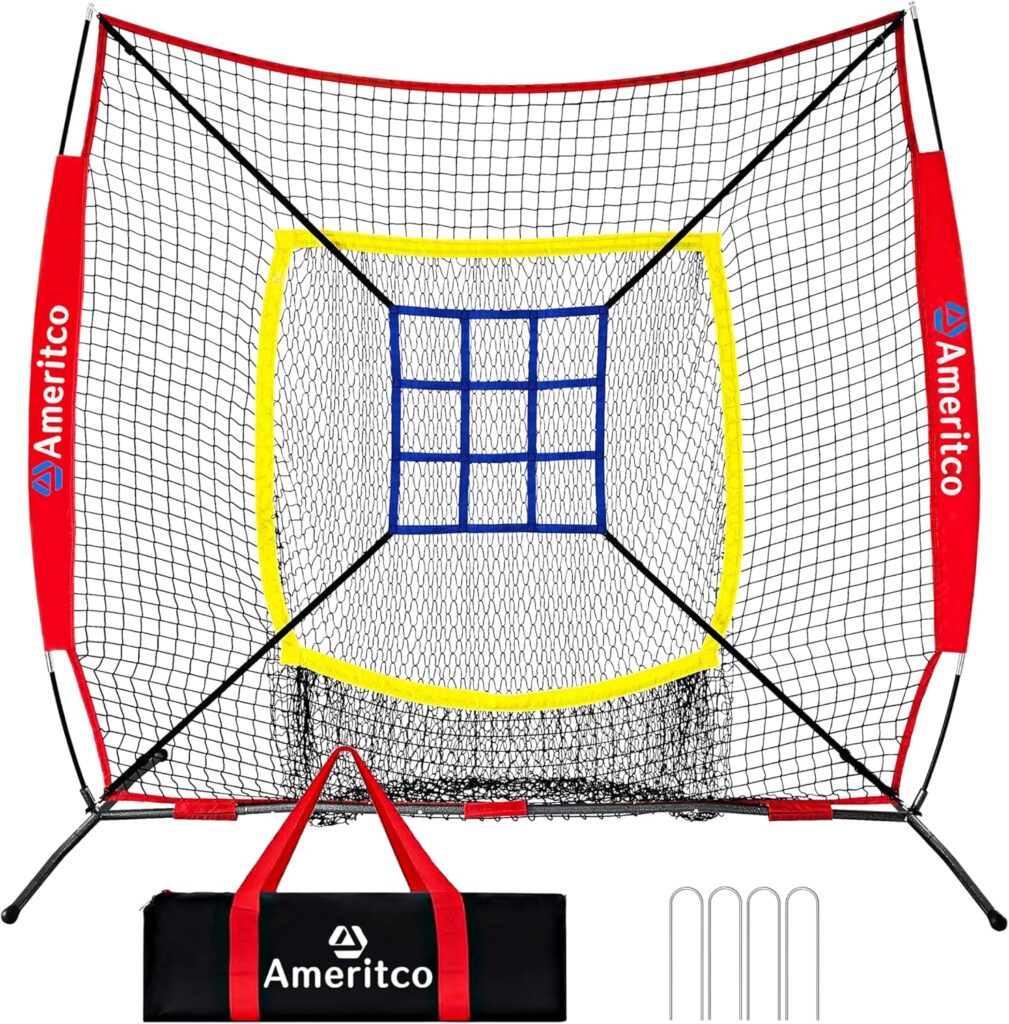
| Best Overall (most versatile for most people) | Ameritco 7x7ft Baseball Net with Strike Zone (Model: AM-7NET) |
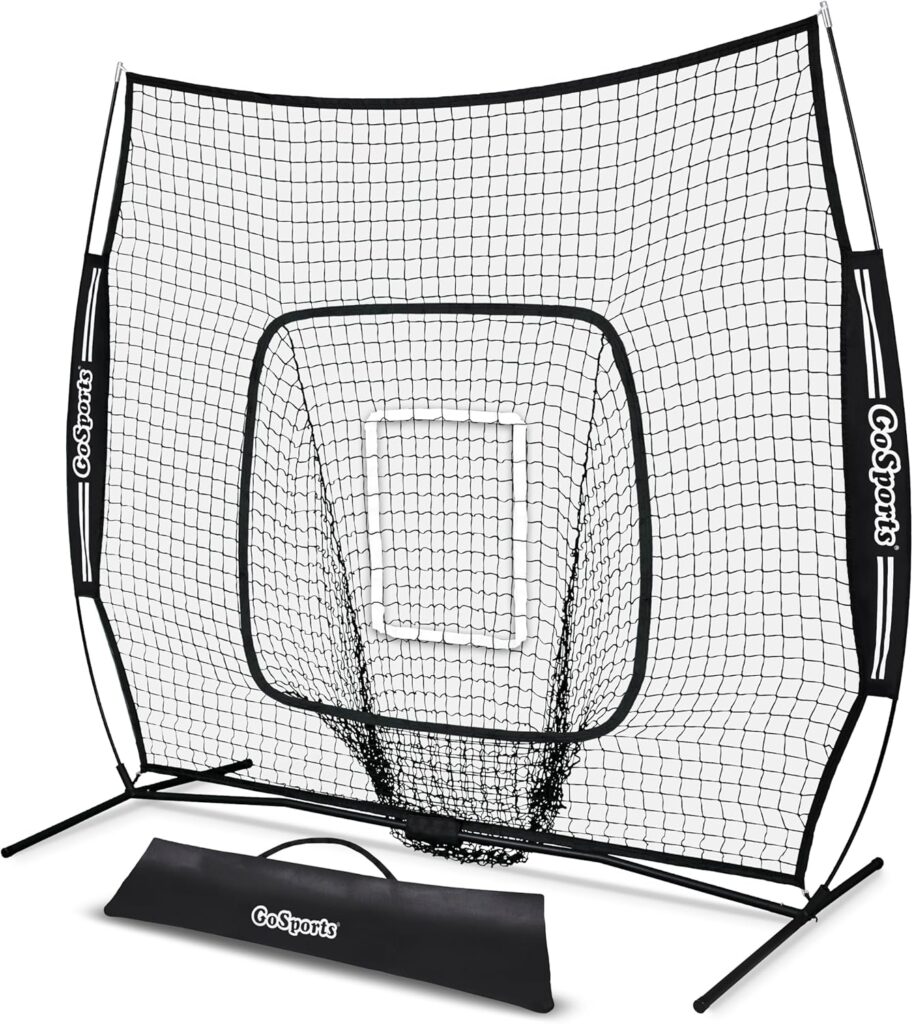
| Best for Kids + Small Spaces | GoSports 6 x 6 ft Youth Baseball & Softball Net (Part: BASB-NET-6X6-BLACK) |
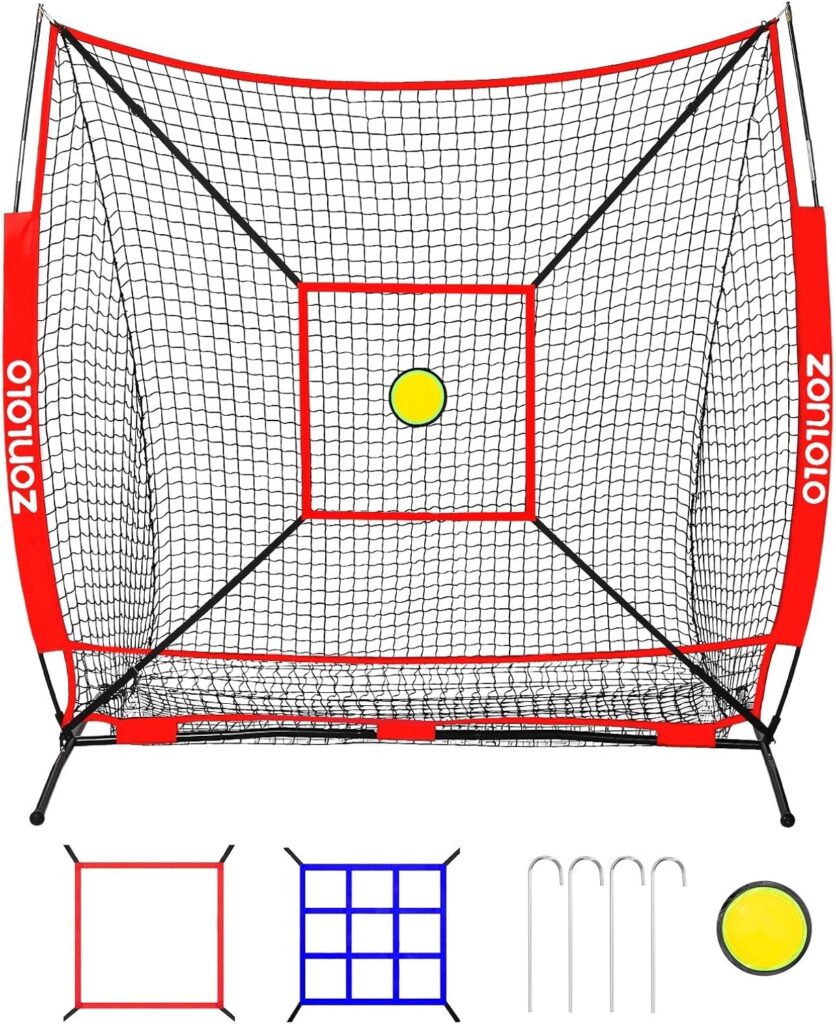
| Best for Accuracy Training (targets) | Zonlolo 6 x 6 FT Baseball Net with 3 Different Targets (Model: ZL6SC) |
| Best All-in-One Backyard Kit | ZONLOLO 6x6ft Net Bundle with Tee, Ball Caddy & 2 Strike Zones (Model: 66BBS) |
| Best for Containing Misses (blocking/cage style) | WICTTISPOSI Baseball Softball Net with Blocking System (6x6FT) |
Detailed Hands-On Style Reviews (What Each One Is Like to Own)
Zonlolo 6 x 6 FT Baseball Net with 3 Different Targets
Tested by: Research-based evaluation (specs + design comparison + listing verification)
Best for: Kids, beginners, and anyone who wants target practice without buying a separate pitching target.
Why We Like It:
This is a smart “starter” net because it gives you multiple target looks (including a grid-style target) without making the whole face unusable for normal hitting reps. The 6×6 size is friendly for backyards and garages, and it’s designed to make ball pickup easier with a collection pocket.
Pros
- Multiple targets make it easier to run accuracy games (throwing and pitching drills)
- 6×6 is a practical size for smaller spaces
- Built to be portable with a compact carry bag mentioned in the listing
Cons
- 6×6 can feel tight if you’ve got stronger teen/adult hitters who spray balls wide
- Target face may not be everyone’s preference if you want a totally open net look
GoSports 6 x 6 ft Youth Baseball & Softball Net
Tested by: Research-based evaluation (specs + brand comparison + listing verification)
Best for: Youth players, coaches running quick stations, and families who want simple setup.
Why We Like It:
This is clearly aimed at younger athletes: 6×6 size, bow-type frame, carry bag, and strike zone—basically the “no drama” option if you want reps without overthinking it. The part number is listed as BASB-NET-6X6-BLACK, which is helpful when you’re trying to avoid ordering the wrong size/version.
Pros
- Youth-friendly size and footprint (easy to place in a driveway or small yard)
- Strike zone included for simple pitching targets
- Identifiable part number makes it easier to match the exact model
Cons
- If you’ve got older hitters, you may outgrow 6×6 faster than you think
- Warranty period shown is limited (listed as six months)
Ameritco 7x7ft Baseball Net with Strike Zone
Tested by: Research-based evaluation (specs + size/feature comparison + listing verification)
Best for: Most players and families who want one net that can handle hitting + pitching + throwing without feeling cramped.
Why We Like It:
If you only buy one net, this is the size that tends to keep people happy longer. 7×7 feels noticeably more forgiving than 6×6 for wide hits and off-target throws, and you still get a visible strike-zone style target pocket. It’s listed as Model AM-7NET, which makes it easier to re-find later.
Pros
- 7×7 coverage is more comfortable for mixed ages and stronger hitters
- Strike-zone target pocket supports pitching command work
- Model name is clearly listed (AM-7NET)
Cons
- Bigger net = bigger storage footprint than a 6×6
- If you’re mainly doing tee work in a tight garage, 7×7 might feel like overkill
WICTTISPOSI Baseball Softball Net with Blocking System
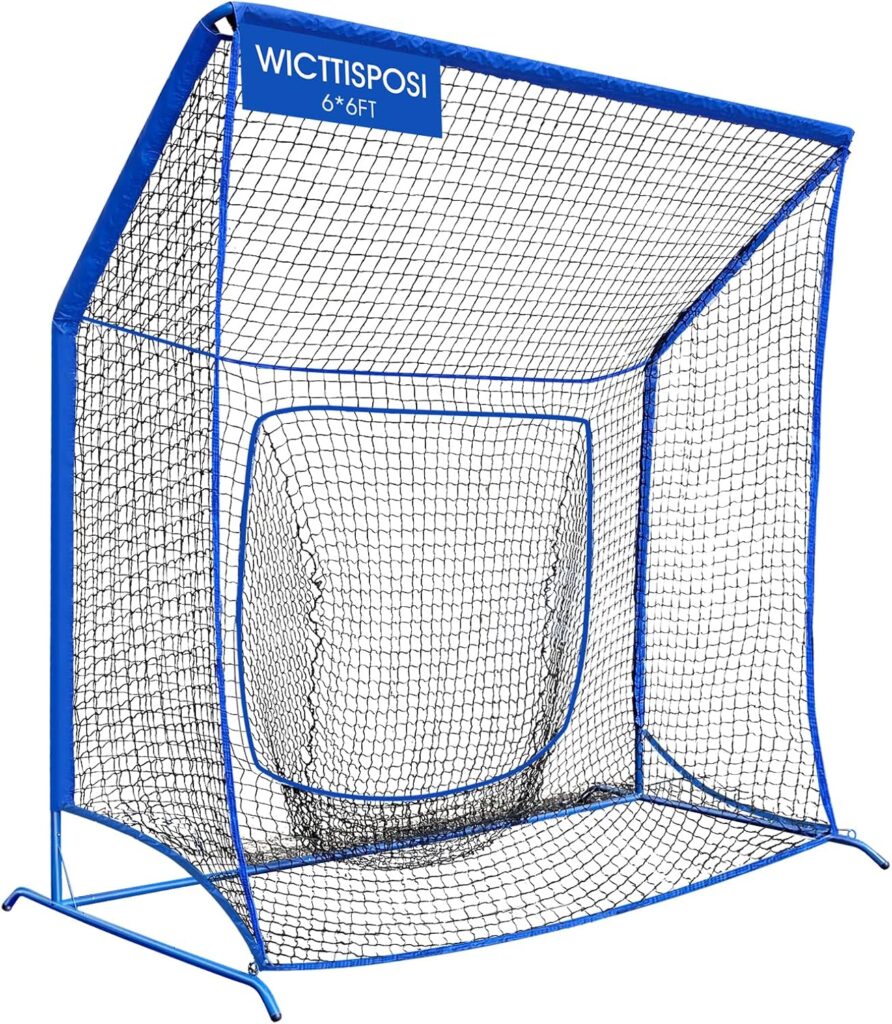
Tested by: Research-based evaluation (design/containment comparison + listing verification)
Best for: Beginners, families, or tight neighborhoods where you really want to keep balls contained.
Why We Like It:
This is the “save my windows and my sanity” style. The listing describes it as a cube-shaped net with protective netting on multiple sides—so if you miss high or wide, you’re less likely to spend the whole session chasing balls. This is especially useful when kids are learning and everything is an adventure.
Pros
- Blocking system helps contain wild misses (huge quality-of-life upgrade)
- Useful for hitting, pitching, and fielding practice in one contained setup
- Great choice if you practice near fences, cars, or neighbors
Cons
- Bulkier look and footprint than a standard bow net
- Not the fastest “pop up and go” option compared to simpler nets
ZONLOLO 6x6ft Net Bundle with Tee, Ball Caddy & 2 Strike Zones
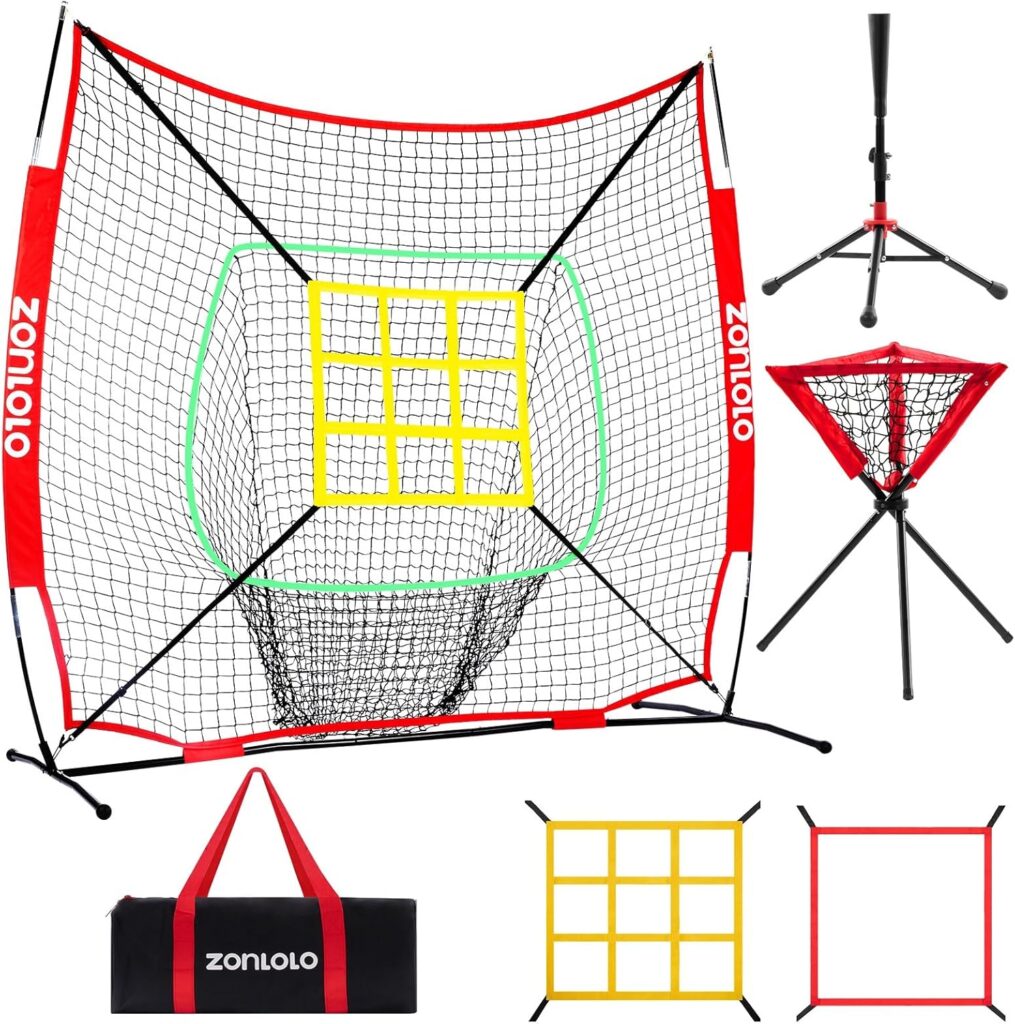
Tested by: Research-based evaluation (bundle value + spec verification + listing verification)
Best for: Families who want a complete backyard setup in one purchase (especially for kids ages ~6–12).
Why We Like It:
If you’re starting from zero, bundles can be the easiest way to actually practice more. This one includes a batting tee, ball caddy, and two strike zones, and the model name is listed as 66BBS. It’s aimed at youth-sized training (the listing mentions it’s a great fit for kids), and it’s the kind of package that makes it easier to do short sessions without hunting for extra gear.
Pros
- All-in-one kit: net + tee + ball caddy + strike zones
- Great for backyard routines where you want everything together
- Model name (66BBS) is listed, so it’s easier to match the exact version
Cons
- Heavier than a basic net (listing shows 16 lb item weight)
- More parts means more stuff to store and keep track of
Other Things to Consider (The Stuff People Regret Not Thinking About)
Net size and coverage:
6×6 is fine for kids and small spaces. If you’ve got bigger hitters, 7×7 can prevent a ton of “missed the net” frustration.
Frame style and stability:
Bow-style bases are common because they’re stable without needing a full cage footprint. If you practice outdoors often, stability matters more than you think.
Ball collection pocket design:
A deep, centered pocket saves time. A shallow pocket turns practice into constant pickup.
Targets and strike zones:
If you’re working pitching command, a strike zone is worth it. If you’re working precision (corners, throw accuracy, “hit this square”), multi-target faces can be more useful.
Setup and storage:
If you dread setting it up, you’ll practice less. Lighter nets are easier to move, but sometimes a bigger/heavier setup is worth it for stability and containment.
Accessories and “hidden costs”:
If the net doesn’t include a carry bag, tee, or targets, you may end up buying those separately. Bundles can be a better deal if you truly need everything.
Frequently Asked Questions
What size hitting net should I buy: 6×6 or 7×7?
If you’re mostly training kids (or you’re limited on space), 6×6 is usually the sweet spot. It fits in garages, driveways, and smaller backyards without feeling like a full construction project.
Go 7×7 if you have teens/adults, mixed ages, or stronger hitters. The extra coverage reduces frustration because mishits and wide throws still stay in the net more often. Over time, 7×7 tends to “age better” as players get stronger and practice gets more intense.
Do I need a strike zone or target pockets?
You don’t need one for basic swing reps—but it helps a lot if you’re doing pitching or command work. A strike zone gives you a consistent visual target so you can run structured drills: inside/outside locations, high/low, fast reps without guessing where the “zone” is.
If accuracy training is a big goal, multi-target nets (like the Zonlolo with multiple targets) can make practice more game-like because you’re aiming at specific spots, not just “somewhere on the net.”
Are cage-style or blocking-system nets worth it?
They’re worth it when you have any of these situations:
- Beginners who miss wide a lot
- Tight practice areas (close neighbors, parked cars, windows, fences)
- You want less chasing and more reps
A blocking system won’t magically fix mechanics, but it protects your surroundings and keeps practice flowing. The tradeoff is bulk—these setups can feel bigger and less “grab-and-go.”
Should I buy a net bundle (with tee and ball caddy) or just the net?
If you already have a decent tee and a way to store balls, buy just the net. But if you’re starting from scratch, bundles often make you practice more because everything is in one package and one routine.
A bundle like the ZONLOLO kit is especially handy for families: tee work, front toss, and basic pitching drills can all happen without extra shopping. The downside is weight and storage—more pieces to keep together.
How do I make a hitting net last longer?
A few simple habits help a lot:
- Don’t leave it outside 24/7 if you can avoid it (sun and weather wear netting faster)
- Check connections/poles after the first few setups—small looseness becomes wobble later
- For hard hitters, rotate impact zones (don’t hit the exact same spot forever)
- Store it dry and clean; wet storage leads to stink and faster material breakdown
Conclusion
If you want one net that covers the most ground for most people, I’d start with the Ameritco 7x7ft Baseball Net with Strike Zone (Model: AM-7NET) because that extra size keeps practice smoother as players grow. For younger players or smaller spaces, the GoSports 6 x 6 ft Youth Baseball & Softball Net (Part: BASB-NET-6X6-BLACK) is the simple, solid pick. If you’re big on accuracy games and target work, the Zonlolo 6 x 6 FT Baseball Net with 3 Different Targets (Model: ZL6SC) is the most “drill-friendly” face design here. If you want the easiest “we can practice today” setup for a family, the bundle is the move: ZONLOLO 6x6ft Net Bundle with Tee, Ball Caddy & 2 Strike Zones (Model: 66BBS). And if your biggest issue is balls flying everywhere, the containment choice is the WICTTISPOSI Baseball Softball Net with Blocking System (6x6FT) because it’s built for the messy learning phase.


Leave a Reply