
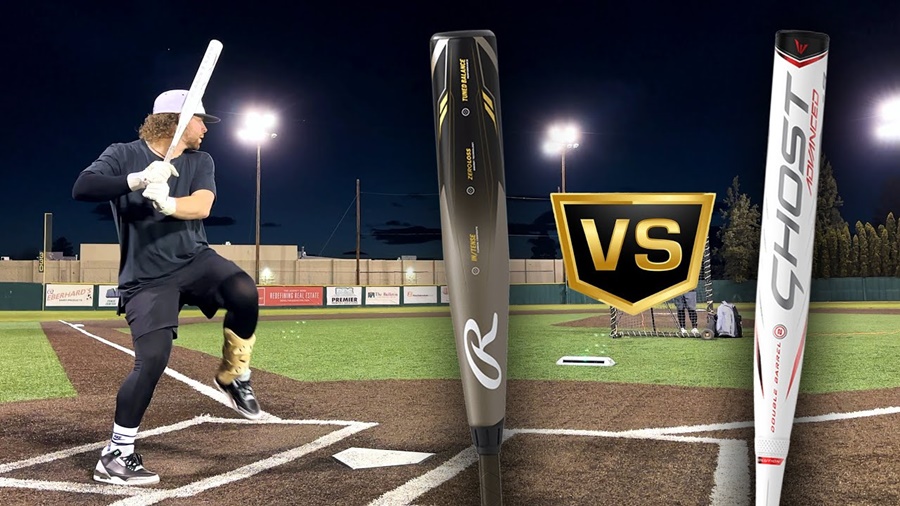
Choosing between a softball bat and a baseball bat might seem simple at first but the differences can significantly affect your performance, safety, and overall experience. Whether you’re a beginner buying your first bat or a parent selecting equipment for your child, understanding the distinctions is essential.
In this guide, we’ll break down the key differences, performance factors, league rules, and how to decide which bat is right for you.
1. The Core Difference: It’s About the Ball
The biggest difference between softball and baseball bats comes down to the ball each sport uses.
- Baseball uses a smaller, harder ball (about 9 inches in circumference).
- Softball uses a larger ball (usually 11–12 inches in circumference).
Because the ball sizes differ, the bats are designed differently to optimize contact and control.
2. Size and Length Differences
Baseball Bats
- Typically range from 28 to 34 inches
- Barrel diameter: 2 ¼” to 2 ⅝”
- Generally lighter and slimmer
Baseball bats are designed for faster swing speeds and precision contact with a smaller ball.
Softball Bats
- Typically range from 26 to 34 inches
- Barrel diameter: usually 2 ¼”
- Often slightly longer with larger sweet spots
Slowpitch softball bats especially tend to have larger barrels and more mass distributed toward the end.
3. Weight and Drop Difference
The “drop” is the difference between a bat’s length (in inches) and weight (in ounces).
For example:
- A 30-inch bat that weighs 20 ounces is a drop -10.
Baseball Bats
- Common drops: -3 (BBCOR), -5, -8, -10
- Adult baseball (high school/college) typically requires -3 BBCOR bats
Softball Bats
- Fastpitch bats often range from -8 to -13
- Slowpitch bats are usually heavier (drop -3 to -5)
Fastpitch players prefer lighter bats for quicker swings, while slowpitch players rely more on power and mass.
4. Barrel Design and Sweet Spot
Baseball Bats
- Narrower barrel
- Smaller sweet spot
- Designed for high-speed pitching
Softball Bats
- Larger, longer sweet spot
- Designed to hit bigger, slower-moving balls (especially in slowpitch)
Softball bats are engineered to compress differently because the ball itself is softer and larger.
5. Material Differences
Both types of bats can be made from:
- Aluminum (alloy)
- Composite
- Hybrid (alloy barrel + composite handle)
- Wood (mostly in baseball)
Baseball at higher competitive levels often requires BBCOR-certified alloy or composite bats, while softball leagues have their own certification standards (like USA Softball or USSSA).
Always check league regulations before purchasing.
6. Can You Use a Softball Bat for Baseball (or Vice Versa)?
Short answer: No, you shouldn’t.
Reasons include:
- Certification standards differ.
- Barrel compression is different.
- Using the wrong bat may be illegal in league play.
- Performance will be negatively affected.
- Safety risks increase.
For example, a softball bat is not built to handle the impact of a baseball, which is smaller and harder.
7. Fastpitch vs Slowpitch Softball Bats
If you’re choosing a softball bat, you’ll also need to know which version of softball you’re playing.
Fastpitch Bats
- Lighter
- Balanced weight
- Designed for quick swing speed
Slowpitch Bats
- Heavier
- Often end-loaded for more power
- Designed for underhand lob-style pitches
Never interchange fastpitch and slowpitch bats unless league rules allow it.
8. Which Should You Choose?
Here’s how to decide:
Choose a Baseball Bat If:
- You play Little League, high school, college, or pro baseball.
- Your league requires BBCOR certification.
- You’re facing overhand pitching with a smaller ball.
Choose a Softball Bat If:
- You play fastpitch or slowpitch softball.
- You’re hitting a larger, softer ball.
- Your league follows USA Softball or USSSA bat standards.
9. Buying Tips for Parents and Beginners
If you’re buying for a child:
- Check league requirements first.
- Measure height and weight to determine proper length.
- Consider swing strength when choosing drop weight.
- Avoid buying a bat “to grow into”—proper fit matters more.
If you’re an adult beginner:
- Choose balanced bats for better control.
- Focus on comfort and grip.
- Don’t automatically buy the heaviest bat for power—bat speed matters more.
Conclusion
Softball bats and baseball bats may look similar, but they’re engineered for different sports with different ball sizes, pitching styles, and performance demands.
If you’re playing baseball, choose a baseball bat.
If you’re playing softball, choose a softball bat.
The right bat improves performance, ensures safety, and keeps you within league regulations.
Leave a Reply