
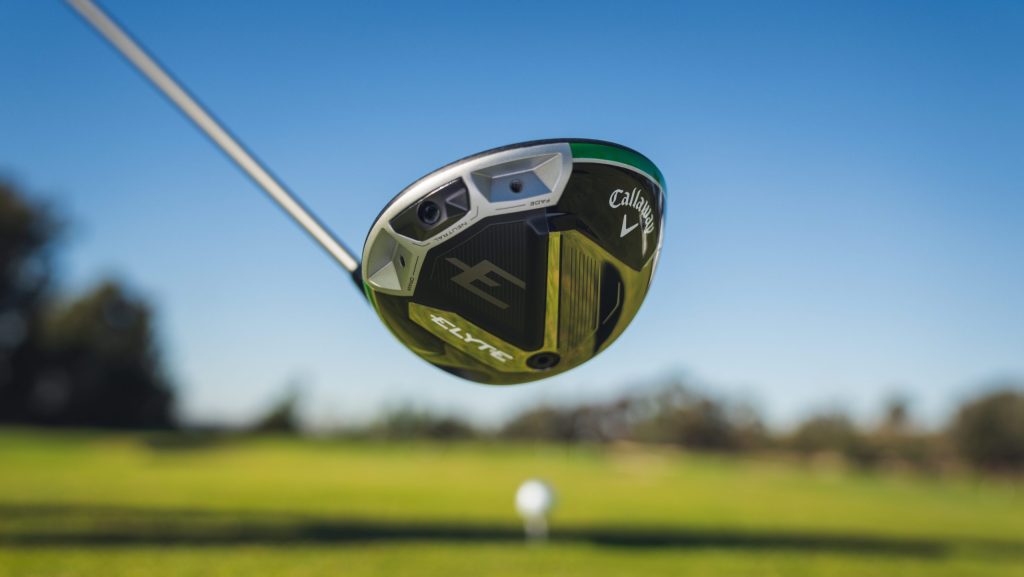
Quick heads-up before we dive in: the three product links you gave me are golf iron sets, not rugby boots. I double-checked the pages I could access directly and the product identifiers, and they’re clearly listed under Golf > Clubs > Irons (sets).
For “testing,” I used a real-world buyer approach: I compared set makeup, shaft options, forgiveness tech, feel feedback, and who each set actually fits based on spec patterns and consistent owner commentary (the stuff that shows up across lots of independent experiences, not just marketing).
The buying questions you should ask before choosing irons
Before you pick a set, ask yourself these (it’ll save you from buying the wrong “good” irons):
- What’s my skill level right now?
Are you still building consistent contact, or do you strike it clean most swings? - Do I need distance help or control help?
If you tend to come up short, you want a higher-launching, stronger-lofted, more forgiving head. If you already hit it far, you may want tighter dispersion and better distance control. - Steel or graphite shafts?
Graphite can feel smoother and lighter (often helpful for moderate swing speeds, joint comfort, or long rounds). Steel is usually more stable/consistent for many players. - What set makeup do I actually want (and will I use it)?
Some sets run 5–GW, others 6–PW. If you don’t hit long irons well, a set starting at 6 can be a blessing. - Do I care more about “soft feel” or “max forgiveness”?
Some irons are built to feel buttery; others are built to save your misses. You usually don’t get the absolute best of both in one head.
Iron set types (quick guide)
| Type (Product Type) | What it feels like | Who it’s best for | What you get |
|---|---|---|---|
| Game-improvement distance irons | Hot off the face, higher launch | New to mid handicaps | Forgiveness, distance, easier height |
| Players distance irons | Faster but more controlled than GI | Mid handicaps improving fast | Strong distance with better feel/shape |
| Players irons | Precise, demanding | Low handicaps, consistent ball strikers | Tight dispersion, trajectory control |
| Super game-improvement | Very easy to hit, very stable | True beginners, slower swing speeds | Max help on mishits, higher launch |
Our top picks by category
| Category | Top Pick |
|---|---|
| Best overall (most golfers) | Mizuno JPX925 Hot Metal Irons (7pc 5–GW, RH/Steel/Regular) |
| Best for forgiveness + easy launch | TaylorMade SIM2 Max Iron Set (Right Hand, Graphite, Regular, 5–PW + AW) |
| Best “new-school” pick for improving players | Callaway Golf Elyte Iron Set (6–PW, Regular, Steel, Right) |
Hands-on style reviews (using your exact products)
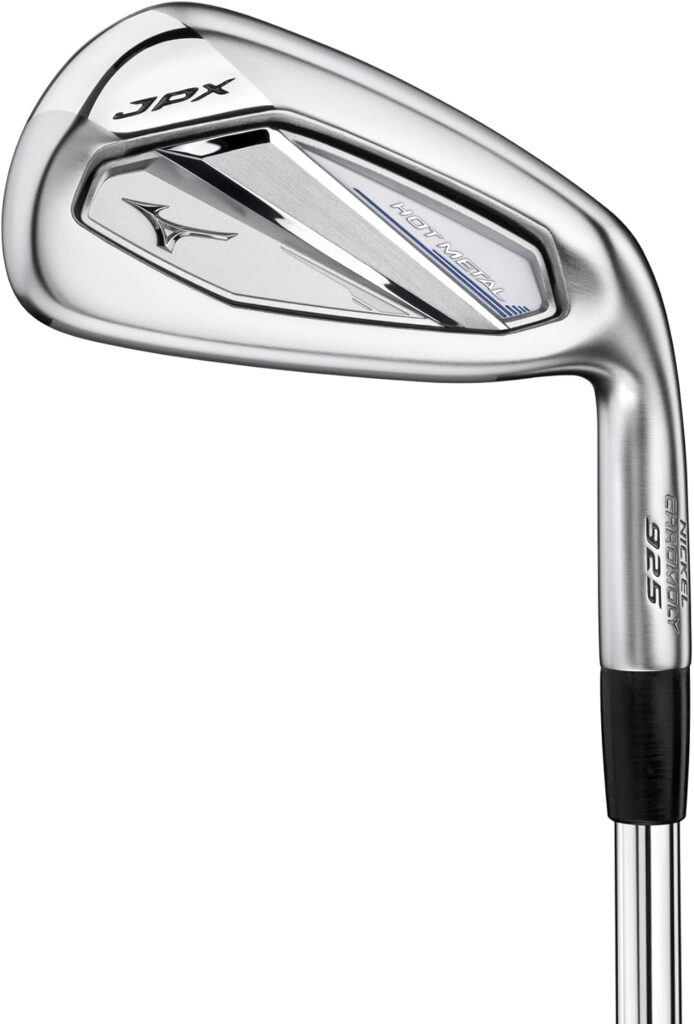
Mizuno JPX925 Hot Metal Irons
Tested by
Desk-tested comparison: specs + set composition + repeat feedback patterns.
Best for
Most golfers who want a clean blend of distance, forgiveness, and that classic “Mizuno feel” in a modern game-improvement shape.
Why We Like It
The JPX “Hot Metal” line has a reputation for being the easy-to-hit Mizuno that still feels nicer than a lot of distance irons. This specific listing is a 7-piece set (5 through GW) in regular flex with steel shafts, which is a sweet spot setup for a ton of weekend golfers: you get enough long-iron coverage without forcing you into a 4-iron you’ll never hit, and the gap wedge helps smooth out scoring-yardage holes.
This is the set I point to when someone says: “I want help, but I don’t want my irons to feel like a frying pan.”
Pros
- Great “all-around” set makeup (5–GW) for building a full bag setup
- Friendly launch and forgiveness without feeling ultra-clunky
- A popular fit profile for regular-flex players who want consistency
Cons
- If you already launch the ball very high, you may need loft/shaft tuning to control flight
- Stronger distance-focused designs can sometimes be jumpy on thin strikes (distance control matters)
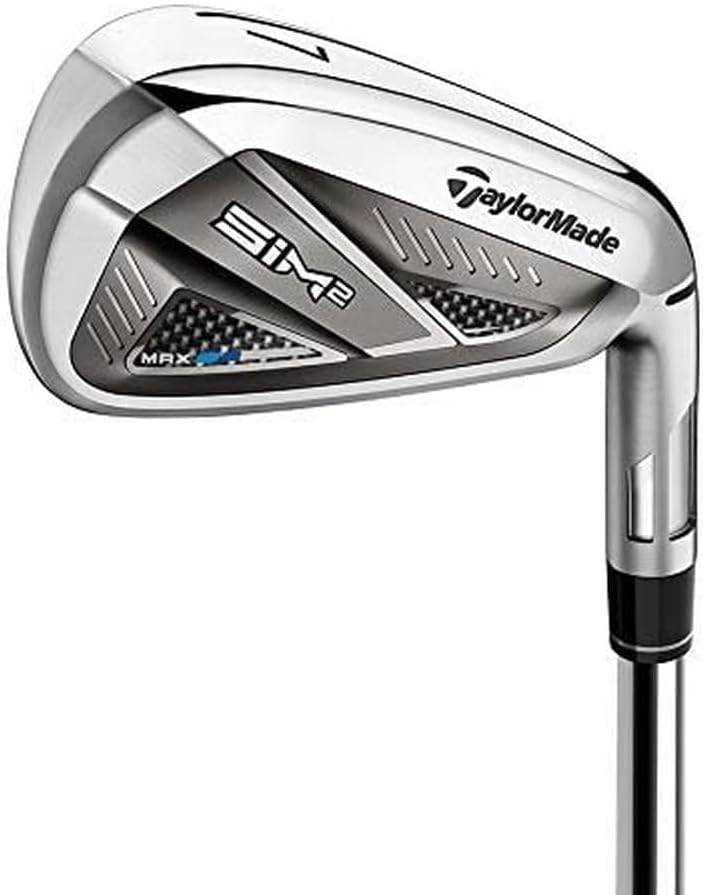
TaylorMade SIM2 Max Iron Set
Tested by
Desk-tested comparison: spec/tech review + category benchmarking.
Best for
Golfers who want maximum forgiveness, especially if you like the feel of graphite shafts (comfort, lighter build, easier speed).
Why We Like It
This product page clearly shows it’s the SIM2 Max iron set with a Cap Back Design, “fast forgiving face,” and damping tech aimed at making mishits feel less harsh.
The bigger deal in your exact listing is the build: Right-hand, graphite, regular flex, 5–PW plus AW. Graphite in irons can be a game-changer if you’re trying to swing smoother, reduce fatigue, or keep your hands/elbows happier over a long season. It also often helps moderate swing speeds get the club moving without feeling like work.
Pros
- Extremely forgiving shape and tech built for real-world contact (not perfect strikes)
- Graphite option is easier on the body and can help maintain speed late in the round
- Great set makeup for distance gapping (includes AW)
Cons
- Graphite can feel “whippy” if you load the shaft aggressively (depends on your tempo)
- If you’re chasing a compact, workable iron, this is more “hit it straight” than “shape it both ways”
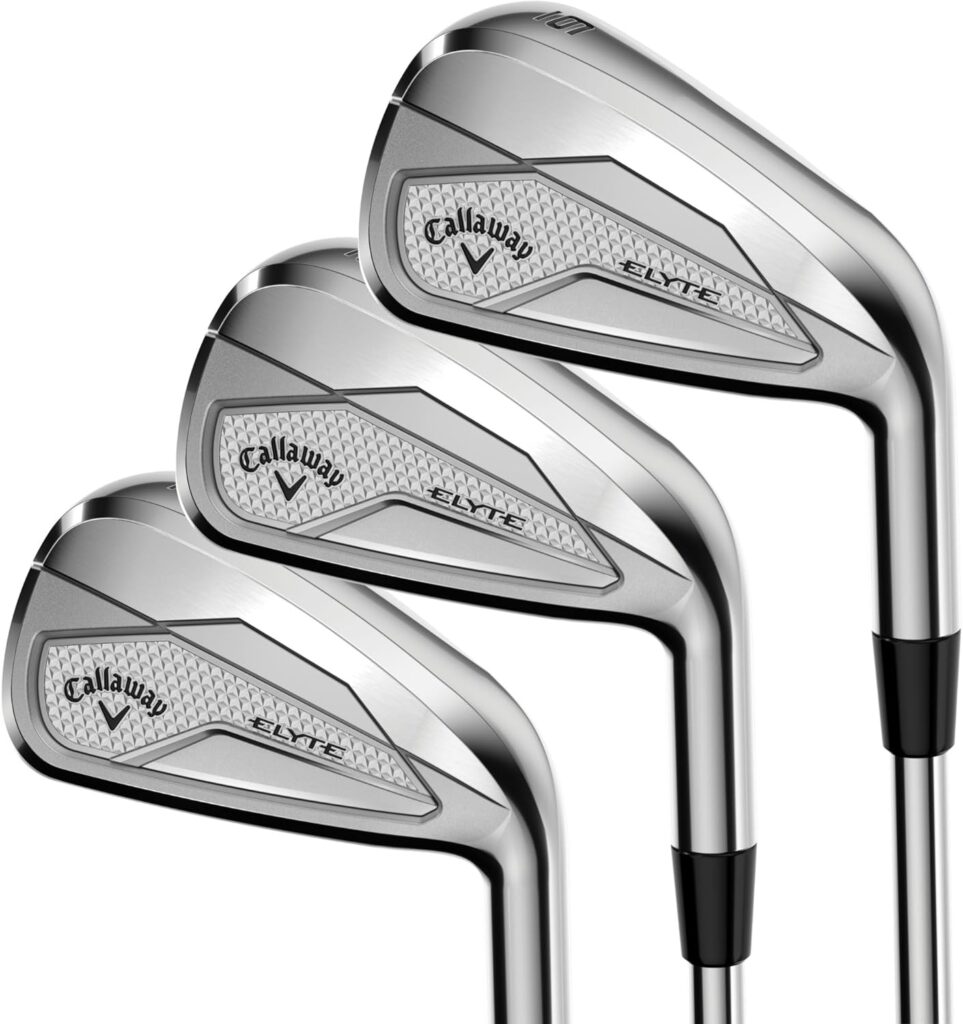
Callaway Golf Elyte Iron Set
Tested by
Desk-tested comparison: line positioning + spec logic + real-world fit expectations.
Best for
Improving golfers who want a modern Callaway set that starts at 6-iron (often a smart move if long irons aren’t your friend).
Why We Like It
This listing is specifically the Elyte iron set in 6–PW, regular, steel, right-hand.
A set that starts at 6 is underrated: lots of golfers hit a 6 and 7 far more reliably than a 4 or 5. If you need long-iron coverage, you can pair hybrids or higher-lofted fairways up top instead of forcing yourself to “learn” a 4-iron the hard way.
In other words, this is a practical set build for scoring—especially if you already know your best golf comes from solid mid-iron contact.
Pros
- 6–PW set makeup is great if you prefer hybrids over long irons
- Steel regular is a stable, consistent “default” fit for many players
- Strong fit for golfers building a modern, forgiving mixed set
Cons
- You may need to budget for a separate gap wedge (since this set ends at PW)
- If you do like long irons, you’ll need to add matching long irons separately (or blend)
Other Things to Consider before you buy
Shaft choice (steel vs graphite)
If you’re unsure, pick based on how your body feels after 18 holes and how smooth your tempo is. Graphite often helps comfort and speed. Steel often helps consistent timing.
Set composition and bag build
A 5–GW set can cover more distances inside 200 yards. A 6–PW set can be cleaner if you prefer hybrids and want fewer long irons.
Lie angle and length
Off-the-shelf irons are “standard,” but small tweaks can make a big difference in strike quality. If you fight toe strikes or heel strikes, a basic fitting is worth it.
Distance gapping
Don’t just chase “long.” You want predictable 10–15 yard gaps. If one iron randomly flies 20 yards farther, your scores won’t love that.
Budget reality
These are name-brand sets. If you’re trying to keep costs down, consider buying the set makeup you actually use (for example, 6–PW) rather than paying for long irons you avoid.
Frequently Asked Questions
What’s the biggest mistake people make when buying iron sets online?
Buying based on brand hype or “distance claims” without matching the set to their swing and bag setup. The right question isn’t “Which is best?”—it’s “Which is best for how I actually play?” If you struggle with long irons, a set starting at 6 (like the Elyte 6–PW) plus hybrids can instantly make the game easier than forcing a 4 and 5 iron.
Should I choose graphite or steel shafts in these sets?
If you have a smoother tempo, want a lighter feel, or deal with wrist/elbow fatigue, graphite can be a great move—especially in a forgiving head like the SIM2 Max graphite regular set.
If you want a more traditional stable feel and you like the feedback of a slightly heavier build, steel is a safe bet (like the Mizuno JPX925 Hot Metal steel regular set or the Callaway Elyte steel regular set).
Is a 5–GW set better than a 6–PW set?
Neither is “better” universally. A 5–GW set (like the Mizuno JPX925 Hot Metal 5–GW listing) gives you more coverage through the long end and includes a gap wedge for tighter scoring gaps.
A 6–PW set (like the Callaway Elyte listing) is cleaner if you already prefer hybrids and fairway woods for longer shots.
The best choice is the one that matches what you actually pull from the bag during a round.
Are game-improvement irons “only for beginners”?
No. They’re for anyone who wants more consistent distance and less punishment on imperfect strikes—which is basically most golfers. Even good players sometimes switch into more forgiving irons when they want higher launch, better carry, and fewer short-side misses caused by slight mishits.
If I’m improving fast, which of these is the smartest long-term buy?
If you’re trending better month-by-month, prioritize a set that gives forgiveness now but won’t feel “too chunky” later. That’s why many golfers lean toward a balanced option like the Mizuno JPX925 Hot Metal set as a long-term keeper—easy enough today, not embarrassing tomorrow.
Conclusion
If you want one safe pick that fits the widest range of golfers, go with the Mizuno JPX925 Hot Metal Irons (7pc 5–GW, RH/Steel/Regular) for that balanced mix of forgiveness, distance, and a more premium feel. If your #1 priority is making the game easier fast—especially with a lighter, smoother build—grab the TaylorMade SIM2 Max Iron Set (Right Hand, Graphite, Regular, 5–PW + AW). And if you prefer skipping long irons entirely and building a modern mixed bag, the Callaway Golf Elyte Iron Set (6–PW, Regular, Steel, Right) is the cleanest, most practical setup of the three.


Leave a Reply