
Practicing sports skills consistently is one of the most effective ways to improve performance. For athletes who train at home or in private facilities, practice enclosures such as golf hitting nets and batting cages are popular solutions. While both serve a similar purpose containing balls during practice they are designed for different sports, training styles, and space requirements.
This article explores the differences between golf hitting nets and batting cages, including their design, benefits, limitations, costs, and ideal use cases. By the end, you will have a clear understanding of which option suits your needs.
What Is a Golf Hitting Net?
A golf hitting net is a compact practice system designed to catch golf balls when a golfer hits them. These nets are commonly used in backyards, garages, basements, and indoor golf studios. Instead of hitting balls across a large driving range, the golfer hits directly into the net.
Key Features of Golf Hitting Nets
- Compact Design
Golf nets are usually smaller than batting cages and can fit into limited spaces. - Quick Setup and Portability
Many models are lightweight and foldable, making them easy to transport and store. - Durable Netting
High-quality golf nets use strong mesh materials designed to absorb the impact of golf balls. - Target Areas
Some nets include built-in targets or strike zones to help golfers improve accuracy. - Compatibility with Training Technology
Golf nets are often used with launch monitors or simulators to analyze swing data.
Benefits of Golf Hitting Nets
- Allow year-round practice at home
- Save money on driving range visits
- Improve swing consistency
- Require minimal space
- Easy to assemble and store
Limitations
- Do not show the actual ball flight
- Primarily useful for swing practice
- Less effective for short game practice like putting
What Is a Batting Cage?
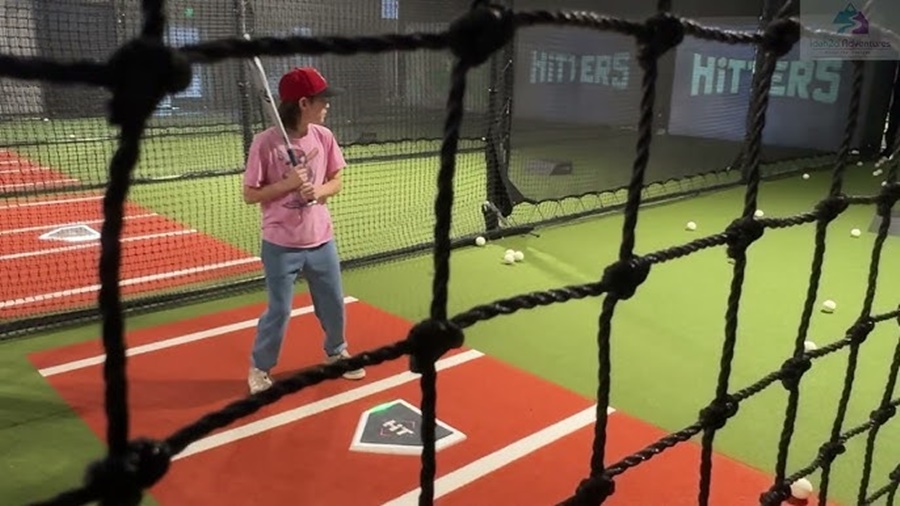
A batting cage is a large enclosure made from heavy-duty netting that surrounds the hitter. It is used primarily in baseball and softball training to contain batted balls safely.
Batting cages are commonly found in training facilities, schools, sports complexes, and backyard setups.
Key Features of Batting Cages
- Large Enclosed Structure
Batting cages typically range from 20 to 70 feet in length, allowing hitters to practice full swings. - Heavy-Duty Netting
The netting is designed to withstand high-speed baseball impacts. - Pitching Machine Compatibility
Many cages are used with pitching machines that simulate real pitching. - Frame Systems
Some cages have permanent steel frames, while others use portable poles. - Full Ball Containment
The cage surrounds the batter to prevent balls from leaving the practice area.
Benefits of Batting Cages
- Enables realistic hitting practice
- Safe for high-speed ball impact
- Suitable for multiple players
- Ideal for team training environments
- Works with pitching machines
Limitations
- Requires much more space
- Higher installation and equipment costs
- Less portable than golf nets
Key Differences Between Golf Hitting Nets and Batting Cages
Although both systems use netting to catch balls, they serve very different training purposes.
1. Purpose
- Golf Hitting Net: Designed for practicing golf swings.
- Batting Cage: Designed for baseball or softball hitting practice.
2. Size and Space Requirements
Golf nets are compact and often fit in small spaces such as garages or small yards.
Batting cages require a much larger footprint, especially full-length cages used with pitching machines.
3. Structure
Golf nets are typically single-sided nets placed in front of the golfer.
Batting cages are fully enclosed tunnels, preventing balls from escaping in any direction.
4. Training Experience
Golf nets focus on swing mechanics and ball contact.
Batting cages simulate live hitting scenarios, especially when used with pitching machines.
5. Cost
Golf hitting nets are generally much more affordable, while batting cages involve higher costs due to larger frames and heavier netting.
Space Considerations
Before choosing either option, you must evaluate the available space.
Golf Hitting Net Space Needs
Typical requirements include:
- Height: 7–10 feet
- Width: 7–10 feet
- Depth: 8–15 feet
These nets can often fit in garages or small backyards.
Batting Cage Space Needs
Standard batting cage sizes include:
- 35 ft cages for small spaces
- 55 ft cages for home practice
- 70 ft cages for full baseball training
This makes batting cages better suited for large yards, training centers, or sports fields.
Installation and Setup
Golf Hitting Nets
Setup usually takes 5–15 minutes. Many models use flexible poles or pop-up frames.
They can be:
- Temporary
- Foldable
- Portable
Batting Cages
Batting cages often require:
- Ground anchors
- Permanent or semi-permanent frames
- Net suspension systems
Installation may take several hours or professional help.
Safety Considerations
Safety is critical when practicing with high-speed balls.
Golf Net Safety
Good golf nets must:
- Absorb ball impact
- Prevent ricochet
- Be placed far enough from the golfer
Using impact screens or high-quality nets improves safety.
Batting Cage Safety
Batting cages provide:
- Full containment
- Protection for spectators and players
- Controlled ball rebound
Proper installation is essential to avoid sagging nets or ball escape.
Cost Comparison
Costs vary depending on quality and size.
Golf Hitting Net Costs
Typical price range:
- Basic nets: $50 – $150
- Mid-range nets: $150 – $400
- Premium simulator nets: $400 – $1,500+
Batting Cage Costs
Typical price range:
- Net only: $200 – $800
- Full cage kits: $800 – $3,000+
- Professional installations: $3,000 – $10,000+
Which One Should You Choose?
Choosing between a golf hitting net and a batting cage depends on your sport, space, and training goals.
Choose a golf hitting net if:
- You are a golfer
- You have limited space
- You want an affordable home practice setup
- You plan to use launch monitors or simulators
Choose a batting cage if:
- You play baseball or softball
- You need realistic hitting practice
- You have sufficient outdoor space
- You train multiple players
Conclusion
Both golf hitting nets and batting cages are excellent tools for improving sports performance. While they share the basic concept of containing balls during practice, their design, size, and purpose differ significantly.
Golf hitting nets are perfect for compact, personal practice environments, whereas batting cages provide full-scale training setups for baseball and softball players.
Understanding your training needs, available space, and budget will help you select the right option and build an effective practice environment that supports long-term skill development.




Leave a Reply