
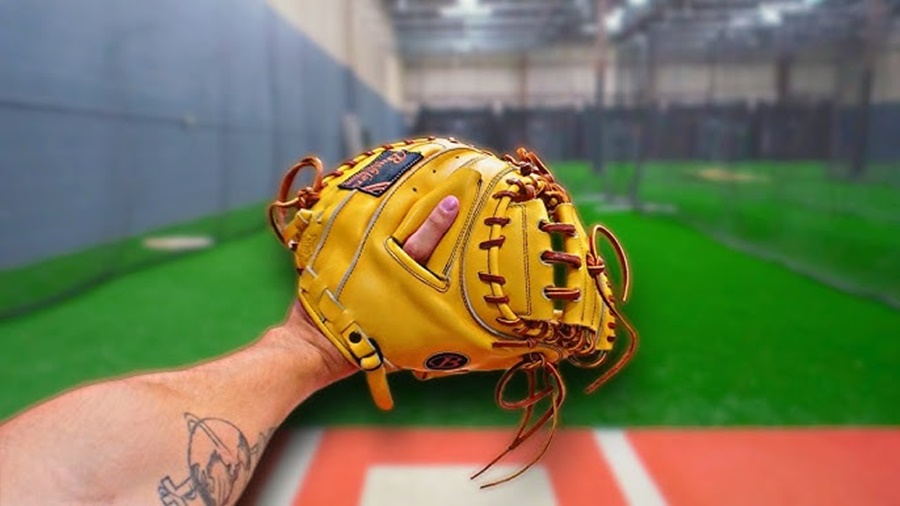
Baseball gloves are specialized tools, and each position on the field demands a design tailored to its unique responsibilities. Two of the most distinctive gloves are the catcher’s mitt and the first baseman’s mitt. While they may look somewhat similar at a glance—both lacking individual finger slots—they are built for very different purposes. Understanding their differences can help players choose the right equipment and improve their performance on the field.
1. Basic Design and Structure
Catcher’s Mitt
A catcher’s mitt is heavily padded and rounded, designed to receive high-speed pitches from the pitcher. It typically features a closed web and a deep pocket to securely catch and hold the ball. The glove is almost circular in shape, allowing the catcher to “frame” pitches effectively.
First Base Mitt
A first baseman’s mitt is longer and more oval-shaped. It has a deep but more elongated pocket and a flexible design. Unlike the catcher’s mitt, it is built to scoop balls out of the dirt and catch throws from infielders, often stretching to reach errant throws.
2. Size and Dimensions
Catcher’s Mitt
- Usually measures around 32.5 to 34 inches in circumference
- Compact and thick for absorbing impact
- Designed for control rather than reach
First Base Mitt
- Typically ranges from 12 to 13 inches in length
- Longer than most gloves to help reach and catch throws
- More flexible for quick ball transfers
3. Padding and Protection
Catcher’s Mitt
Catcher’s mitts have the most padding of any glove in baseball. Catchers handle fast pitches, foul tips, and sometimes collisions at home plate. The extra cushioning protects the hand from repeated high-velocity impacts.
First Base Mitt
While still padded, first base mitts prioritize flexibility over maximum protection. First basemen need to react quickly, scoop balls, and make fast plays, so the glove must be easier to maneuver.
4. Webbing Style
Catcher’s Mitt
- Closed web design
- Helps conceal the ball from the umpire and opposing team
- Adds strength and stability when catching fast pitches
First Base Mitt
- Typically features an open or semi-open web
- Allows visibility and flexibility
- Helps in scooping and securing low throws
5. Function and Role on the Field
Catcher’s Mitt
The catcher’s primary job is to receive pitches cleanly, prevent passed balls, and control the game defensively. The mitt is designed to:
- Absorb pitch impact
- Frame pitches for strikes
- Block balls in the dirt
First Base Mitt
The first baseman plays a crucial role in fielding throws and completing outs. The mitt is designed to:
- Stretch and reach for throws
- Scoop balls from the ground
- Secure catches during close plays
6. Flexibility and Break-In
Catcher’s Mitt
These mitts are stiff and require a longer break-in period. The structure must remain firm to handle repeated impact and maintain shape.
First Base Mitt
First base mitts are more flexible and easier to break in. This allows for quicker adjustments and better control when fielding unpredictable throws.
7. Ball Control and Transfer
Catcher’s Mitt
Designed more for catching than quick transfers. While catchers do throw, the mitt prioritizes secure catching over rapid ball release.
First Base Mitt
Optimized for smoother ball transfers. First basemen often need to quickly throw to other bases, so the glove supports faster hand movement.
8. Similarities Between the Two
Despite their differences, catcher’s mitts and first base mitts share some features:
- Both lack individual finger slots
- Both have deeper pockets than standard gloves
- Both are position-specific and not interchangeable in competitive play
Conclusion
While the catcher’s mitt and first base mitt may appear similar at first glance, their differences are significant and purposeful. The catcher’s mitt is built for protection, durability, and pitch handling, whereas the first base mitt emphasizes reach, flexibility, and quick fielding. Choosing the right mitt depends entirely on the position you play and the demands that come with it. Using the correct glove not only enhances performance but also reduces the risk of injury and improves overall efficiency on the field.

Leave a Reply