
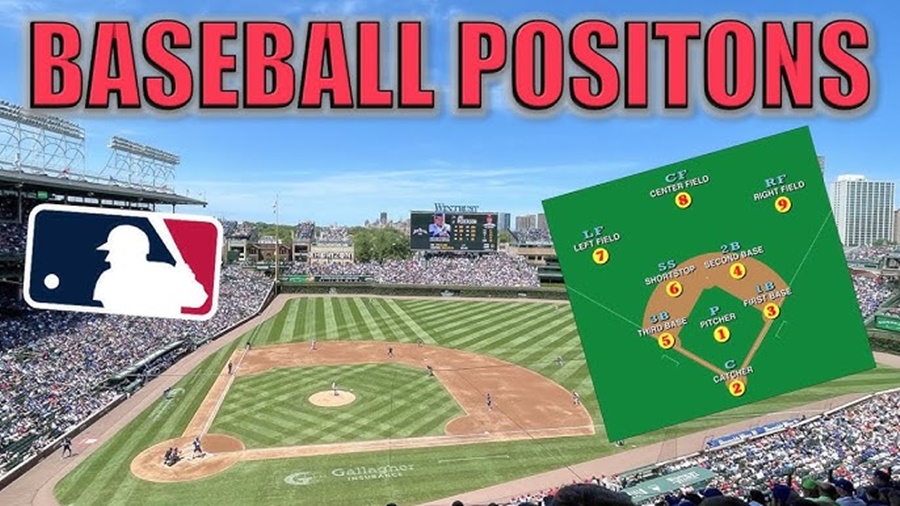
Baseball is a team sport played by two teams of nine players. Each team has nine defensive positions on the field at a time. Every position has a specific role, responsibility, and typical skill set.
This article explains all baseball positions, where they play on the field, and what they do during a game using simple diagrams made from text, not images.
Overview of Defensive Positions
Baseball positions are commonly divided into:
- Battery
- Pitcher (P)
- Catcher (C)
- Infielders
- First Baseman (1B)
- Second Baseman (2B)
- Shortstop (SS)
- Third Baseman (3B)
- Outfielders
- Left Fielder (LF)
- Center Fielder (CF)
- Right Fielder (RF)
The Battery
Pitcher (P)
Location: On the pitcher’s mound, in the center of the field
Primary Role: Throws the ball to the catcher to begin each play
Key Responsibilities:
- Deliver pitches with speed, movement, and accuracy
- Prevent batters from getting hits
- Control the pace of the game
- Field balls hit near the mound
Skills Needed:
- Arm strength and endurance
- Precision and control
- Mental toughness
The pitcher is often the most influential player on the field.
Catcher (C)
Location: Behind home plate
Primary Role: Receives pitches and directs the defense
Key Responsibilities:
- Catch every pitch
- Call pitch types and locations
- Throw out runners attempting to steal bases
- Block wild pitches
- Coordinate defensive plays
Skills Needed:
- Quick reflexes
- Strong throwing arm
- Leadership
- Game awareness
The catcher sees the entire field and acts as the team’s on-field strategist.
Infield Positions
First Baseman (1B)
Location: Near first base
Primary Role: Record outs at first base
Key Responsibilities:
- Catch throws from other infielders
- Field ground balls hit to the right side
- Hold runners on first base
Skills Needed:
- Good hands
- Stretching ability
- Quick reactions
First base is often played by strong hitters, but defense is still critical.
Second Baseman (2B)
Location: Between first and second base
Primary Role: Cover the right side of the infield
Key Responsibilities:
- Field ground balls
- Turn double plays
- Cover second base on steals
- Act as a relay for outfield throws
Skills Needed:
- Speed and agility
- Quick decision-making
- Accurate throwing
Second basemen must move quickly and think fast.
Shortstop (SS)
Location: Between second and third base
Primary Role: Defensive leader of the infield
Key Responsibilities:
- Field difficult ground balls
- Cover second base
- Turn double plays
- Back up other infielders
Skills Needed:
- Excellent range
- Strong arm
- Fast reflexes
Shortstop is often considered the most demanding defensive position.
Third Baseman (3B)
Location: Near third base
Primary Role: Defend against hard-hit balls
Key Responsibilities:
- Field line drives and bunts
- Throw long distances to first base
- Guard against steals and bunts
Skills Needed:
- Strong arm
- Quick reactions
- Courage (balls are hit very hard here)
Outfield Positions
Left Fielder (LF)
Location: Left side of the outfield
Primary Role: Catch fly balls and field hits to left field
Key Responsibilities:
- Catch fly balls
- Field ground balls
- Throw runners out at bases
Skills Needed:
- Catching ability
- Accurate throwing
- Awareness of base runners
Left field often requires less arm strength than right field.
Center Fielder (CF)
Location: Middle of the outfield
Primary Role: Cover the most ground
Key Responsibilities:
- Catch deep fly balls
- Back up left and right fielders
- Lead the outfield defense
Skills Needed:
- Speed
- Excellent tracking ability
- Strong communication
Center fielders are usually the fastest outfielders.
Right Fielder (RF)
Location: Right side of the outfield
Primary Role: Defend long throws to third base and home
Key Responsibilities:
- Catch fly balls
- Stop extra-base hits
- Make long, accurate throws
Skills Needed:
- Strong throwing arm
- Good catching ability
Right field often demands the strongest arm among outfielders.
Summary Table
| Position | Abbreviation | Main Skill Focus |
|---|---|---|
| Pitcher | P | Pitching control |
| Catcher | C | Defense & leadership |
| First Base | 1B | Catching throws |
| Second Base | 2B | Speed & agility |
| Shortstop | SS | Range & arm strength |
| Third Base | 3B | Reaction & arm |
| Left Field | LF | Catching |
| Center Field | CF | Speed & coverage |
| Right Field | RF | Strong throwing |
Conclusion
Every baseball position plays a vital role. While some positions focus on speed, others demand arm strength, quick reflexes, or leadership. Understanding these roles makes watching and playing baseball far more enjoyable.

Leave a Reply