
Indoor golf practice has become increasingly popular as golfers look for convenient ways to improve their swing at home. Two of the most common setups for home practice are golf hitting nets and golf impact screens. While both allow you to hit golf balls indoors or in limited spaces, they serve different purposes and offer different experiences.
This article provides a detailed comparison between golf hitting nets and impact screens, helping you decide which option is best for your practice goals, space, and budget.
What Is a Golf Hitting Net?
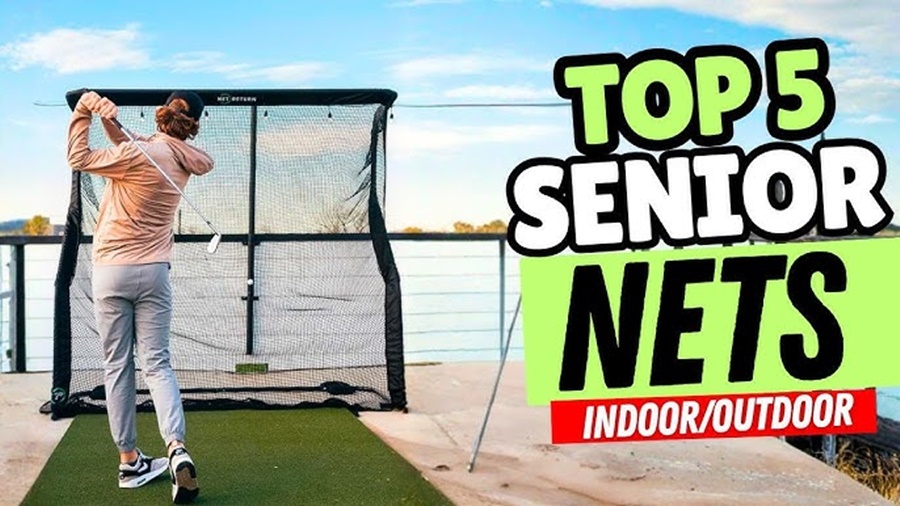
A golf hitting net is a simple practice setup designed to safely stop golf balls after you hit them. It usually consists of a durable net supported by a frame or flexible poles.
Golf hitting nets are widely used by golfers who want a quick and affordable way to practice their swing at home.
Key Features of Golf Hitting Nets
- Ball Containment
The main purpose of a hitting net is to catch the golf ball immediately after impact. - Portable Design
Most hitting nets are lightweight and can be folded or assembled quickly. - Indoor and Outdoor Use
They can be used in garages, backyards, basements, or even large rooms. - Simple Setup
Many nets can be installed within minutes without professional help. - Low Cost
Compared to full simulator systems, hitting nets are relatively inexpensive.
Advantages of Golf Hitting Nets
- Affordable option for home practice
- Easy to move and store
- Quick installation
- Suitable for small spaces
- Great for swing repetition and warm-ups
Disadvantages of Golf Hitting Nets
- No ball flight visualization
- Limited feedback without additional technology
- Less immersive practice experience
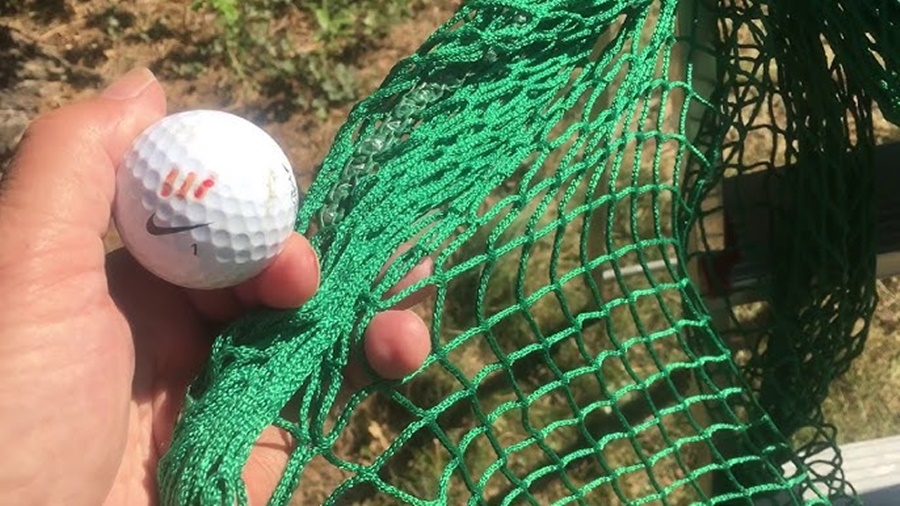
- May wear out faster depending on quality
What Is a Golf Impact Screen?
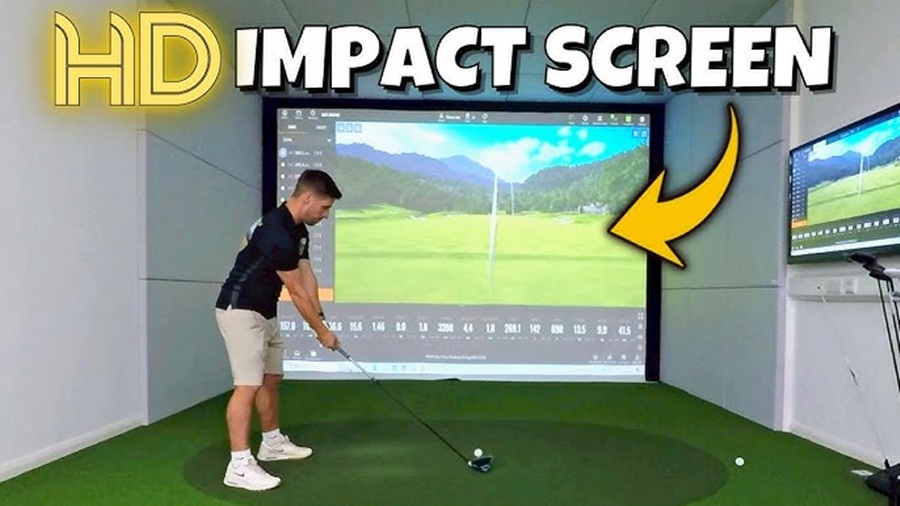
A golf impact screen is a specially designed projection screen that allows golfers to hit golf balls directly into it while displaying a simulated golf course or driving range using a projector.
Impact screens are commonly used in golf simulator setups, creating a realistic and immersive indoor golfing experience.
Key Features of Golf Impact Screens
- Ball Impact Absorption
The material is engineered to absorb high-speed golf ball impacts safely. - Projection Capability
A projector displays golf courses, practice ranges, or simulation software on the screen. - Simulator Integration
Impact screens often work with launch monitors and golf simulator software. - High Durability Materials
Multi-layer polyester or specialized fabrics help withstand repeated impacts. - Large Display Surface
Screens are usually wide enough to mimic the feel of hitting toward a real fairway.
Advantages of Golf Impact Screens
- Realistic golf simulator experience
- Visual ball flight and course simulation
- Compatible with launch monitors
- Highly immersive practice environment
- Suitable for serious golfers and training
Disadvantages of Golf Impact Screens
- More expensive than hitting nets
- Requires additional equipment (projector, simulator software)
- Needs more installation space
- Setup can be more complex
Key Differences Between Golf Hitting Nets and Impact Screens
1. Purpose
- Hitting Net: Basic swing practice and ball containment
- Impact Screen: Full simulator experience with visual feedback
2. Cost
Hitting nets are significantly cheaper. A basic net may cost between $100–$500, while an impact screen setup with projector and simulator software can range from $1,500 to $10,000 or more.
3. Feedback and Data
Hitting nets typically provide limited feedback, unless paired with a launch monitor.
Impact screens are designed to work with simulator systems, allowing golfers to see:
- Ball flight
- Shot direction
- Distance
- Spin rates
- Club data
4. Space Requirements
- Hitting Net: Works well in smaller areas such as garages.
- Impact Screen: Requires deeper space for projector placement and safe swing clearance.
Typical simulator rooms require:
- 9–10 ft ceiling height
- 10–16 ft room depth
- 12–16 ft room width
5. Setup Complexity
Hitting nets are usually plug-and-play solutions.
Impact screens require:
- Frame installation
- Screen tensioning
- Projector alignment
- Simulator software setup
6. Durability
Impact screens are designed to handle thousands of direct golf ball impacts, whereas some hitting nets may stretch or tear over time if not made with high-quality materials.
Which Option Is Better for Home Practice?
The best option depends on your practice goals, budget, and available space.
Choose a Golf Hitting Net If:
- You want a budget-friendly practice setup
- You mainly focus on swing repetition
- You have limited space
- You want something portable
Choose an Impact Screen If:
- You want a full golf simulator experience
- You enjoy virtual golf courses
- You use a launch monitor
- You have a dedicated indoor golf room
Hybrid Setup: Net + Launch Monitor
Some golfers use a hybrid solution:
- Golf hitting net
- Launch monitor
- Tablet or phone for ball flight visualization
This approach provides valuable shot data without the cost of a full simulator room.
Conclusion
Both golf hitting nets and impact screens are excellent tools for improving your golf game at home, but they serve different types of golfers.
A golf hitting net is ideal for casual practice, portability, and affordability. It allows golfers to work on their swing anytime without requiring complex equipment.
An impact screen, on the other hand, is designed for golfers seeking a professional indoor simulator experience. While it requires more investment and space, it delivers unmatched realism and detailed performance feedback.
Before making a decision, consider your practice goals, available space, and budget. The right setup can transform your home into a powerful training environment and help you improve your golf game year-round.
Leave a Reply