
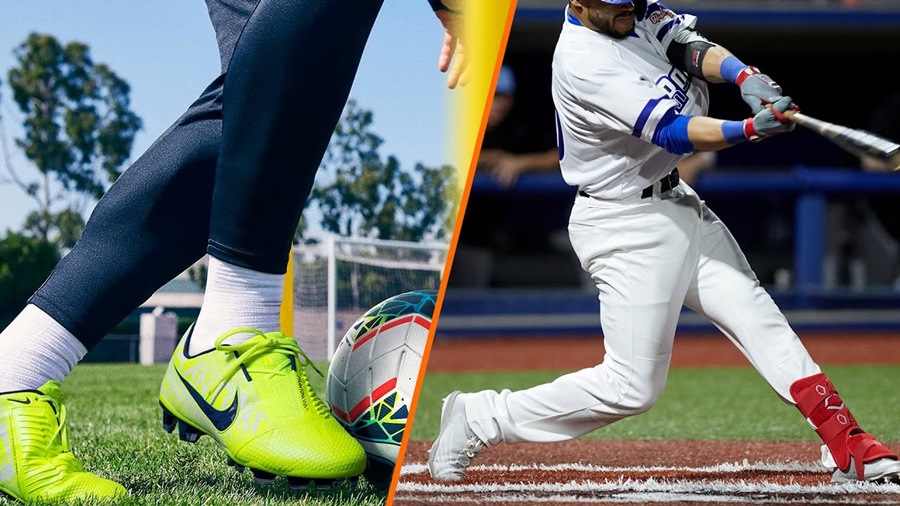
When it comes to choosing the right footwear for the diamond, many players and parents ask the same question: Are softball cleats and baseball cleats different and which are better?
While they may look similar at first glance, softball and baseball cleats are designed with specific differences in mind. The “better” option ultimately depends on the sport you’re playing, your position, your league rules, and your personal comfort preferences.
This complete guide breaks down the differences, similarities, and key factors to help you choose the right pair.
Are Softball and Baseball Cleats the Same?
At a basic level, both types of cleats are designed to:
- Provide traction on dirt and grass
- Support quick acceleration and lateral movement
- Offer stability while batting, fielding, and running bases
However, there are structural and design differences that make each better suited for its respective sport.
Key Differences Between Softball and Baseball Cleats
1. Toe Cleat (The Biggest Difference)
Baseball cleats typically have a toe cleat (also called a “toe spike”).
This extra spike sits at the front of the shoe and provides extra traction when:
- Exploding out of a batting stance
- Pushing off while pitching
- Sprinting from a stationary position
Softball cleats usually do NOT have a toe cleat.
Why? Many softball leagues (especially youth and fastpitch leagues) prohibit toe cleats for safety reasons. The absence reduces the risk of injury during slides or contact plays.
If your league bans toe cleats, baseball cleats are not allowed.
2. Ankle Support Options
Softball cleats are often available in:
- Low-top
- Mid-top
- High-top
Fastpitch softball players frequently prefer mid or high-top styles for added ankle stability during lateral movements.
Baseball cleats are more commonly low-cut, especially at higher levels, allowing for quicker foot movement and lighter weight.
3. Field and Game Differences
Baseball fields are typically larger, especially in the outfield. Players often sprint longer distances, so lightweight speed-focused cleats are popular.
Softball fields are smaller, but the game includes more lateral movement, slap hitting, and quick reaction plays. Cleats with enhanced side support are often preferred.
4. Fit and Design
In many cases:
- Softball cleats are designed specifically for female athletes, with narrower heels and different arch support.
- Baseball cleats are traditionally designed around a male foot shape.
That said, many brands now offer unisex models.
Types of Cleats (For Both Sports)
Regardless of softball or baseball, cleats come in three main materials:
Metal Cleats
- Best traction
- Ideal for high school, college, and advanced play
- Often banned in youth leagues
- Not typically allowed in youth softball
Molded (Rubber) Cleats
- Most common for youth players
- Versatile and affordable
- Good for various field conditions
Turf Shoes
- Designed for artificial turf
- Short rubber studs instead of spikes
- Great for training or indoor facilities
Can You Wear Baseball Cleats for Softball?
Sometimes—but it depends on the league.
You can wear baseball cleats for softball if:
- The league allows toe cleats
- The fit is comfortable
- The cleat type (metal vs molded) is permitted
You should NOT wear baseball cleats if:
- Toe cleats are banned (common in youth and fastpitch softball)
- The cleats feel too narrow or poorly fitted
Always check league regulations first.
Can You Wear Softball Cleats for Baseball?
Yes, but with limitations.
Softball cleats can be used for baseball, especially at youth levels where molded cleats are standard. However:
- You’ll lose the extra toe traction that baseball cleats provide.
- Advanced players may prefer the added grip from a toe cleat.
For competitive baseball players, baseball-specific cleats are usually better.
Which Is Better? (Quick Comparison)
| Situation | Better Choice |
|---|---|
| Youth Softball | Softball cleats |
| Fastpitch Softball | Softball cleats |
| Competitive Baseball | Baseball cleats |
| Tee-ball / Beginner | Either (check rules) |
| Turf Field | Turf shoes |
There is no universal “better” — only what fits your sport and level of play.
Position-Based Considerations
Pitchers
- Baseball pitchers benefit from the toe cleat for push-off.
- Softball pitchers (especially fastpitch windmill style) do not require a toe cleat.
Infielders
- Need explosive acceleration.
- Baseball players often prefer toe spikes.
- Softball players prioritize lateral support.
Outfielders
- Focus on speed and comfort.
- Lightweight cleats matter more than toe spikes.
Comfort Matters Most
Regardless of sport, prioritize:
- Proper sizing
- Arch support
- Breathability
- Weight
- Break-in time
A poorly fitting cleat will hurt performance far more than choosing the “wrong” category.
Youth Players: What Parents Should Know
For growing athletes:
- Molded cleats are usually safest.
- Avoid buying oversized cleats for “room to grow.”
- Comfort and stability are more important than brand.
Always verify league rules before purchasing.
Conclusion
Choosing between softball cleats and baseball cleats isn’t about which one is universally better it’s about which one is better for your game. While the two look similar, key differences like the presence of a toe cleat, league regulations, field size, and movement patterns make each type specifically suited to its sport.
Softball cleats are designed with lateral support and league safety rules in mind, especially in fastpitch and youth play. Baseball cleats, on the other hand, often include a toe spike for explosive acceleration and are built for the demands of larger fields and longer sprints.
Leave a Reply