
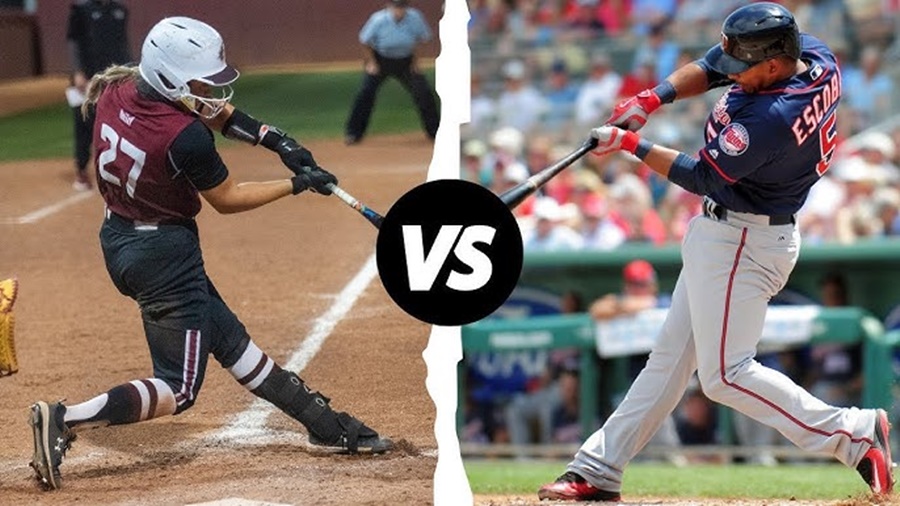
Hitting a ball traveling at high speed with a round bat is one of the toughest skills in sports. While softball and baseball hitting may look similar, the differences in pitching style, ball size, field dimensions, and game speed require unique adjustments from hitters.
In this full guide, we’ll break down:
- Key mechanical differences
- Approach and timing adjustments
- Strategic mindset changes
- Practical hitting tips for both sports
1. The Biggest Differences Between Softball and Baseball Hitting
1. Pitching Style
Softball (Fastpitch):
- Underhand windmill motion
- Release point closer to the plate
- Rise balls, drop balls, and heavy spin movement
- Reaction time is shorter due to closer distance
Baseball:
- Overhand or three-quarter arm slot
- Higher release point
- Fastballs, breaking balls, off-speed pitches
- More traditional downward plane on pitches
What This Means for Hitters:
- Softball hitters must react faster and adjust to upward pitch movement (rise ball).
- Baseball hitters must handle sharper breaking balls and velocity changes over longer distances.
2. Ball Size & Weight
- Softball: Larger (11–12 inches circumference), slightly softer.
- Baseball: Smaller (9 inches), denser and harder.
Impact on Hitting:
- Softballs are easier to see but harder to drive long distances.
- Baseballs carry farther when squared up but require more precision.
3. Field Dimensions & Game Speed
| Feature | Softball | Baseball |
|---|---|---|
| Pitching Distance | 43 ft (fastpitch) | 60 ft 6 in |
| Base Paths | 60 ft | 90 ft |
| Reaction Time | Shorter | Slightly longer |
| Game Style | Fast, small ball | Power & situational |
Softball tends to emphasize:
- Slapping
- Bunting
- Speed
Baseball often emphasizes:
- Power hitting
- Extra-base hits
- Launch angle optimization
2. Mechanical Differences in Swing
A. Stance & Setup
Softball:
- Slightly more upright stance
- Hands often higher
- Smaller stride
Baseball:
- More varied stances
- Larger leg kick common
- Greater weight transfer
Because softball pitching is closer and faster in reaction time, hitters typically use a quicker, more compact load.
B. Swing Path
Softball Swing:
- Slightly flatter path
- Designed to handle rise balls
- More contact-focused
Baseball Swing:
- Often slight uppercut
- Designed for backspin and lift
- Emphasis on launch angle
Softball hitters cannot afford a long, looping swing due to limited reaction time.
C. Timing & Reaction
In softball, the ball reaches the plate extremely fast relative to distance. Hitters must:
- Load earlier
- Recognize pitch type immediately
- Commit quickly
In baseball, hitters have slightly more time but must adjust to:
- More pitch types
- Deeper breaking movement
- Higher velocity at advanced levels
3. Mental Approach Differences
Softball Mentality
- Expect movement every pitch
- Attack early in count
- Pressure defense with speed
- Focus on line drives
Softball is often about quick offense and chaos.
Baseball Mentality
- Work counts
- Look for mistakes
- Drive the ball gap-to-gap
- Stay disciplined
Baseball often rewards patience and pitch selection over aggression.
4. Tips for Softball Hitters
1. Shorten Your Swing
Quick hands are critical. Eliminate unnecessary movement.
2. Start Early
Begin your load earlier because the pitcher is closer.
3. Train Against Rise Balls
Practice hitting high velocity at the top of the zone.
4. Focus on Hard Contact
Line drives win games. Don’t overswing.
5. Improve Pitch Recognition
Spin recognition drills are essential.
5. Tips for Baseball Hitters
1. Develop Plate Discipline
Learn to recognize breaking balls and lay off bad pitches.
2. Use the Whole Field
Opposite-field hitting increases consistency.
3. Build Controlled Power
Strength matters, but mechanics matter more.
4. Adjust to Velocity
Practice against high-speed pitching machines.
5. Master Situational Hitting
Know when to move runners or hit for power.
6. Can Softball Players Transition to Baseball (or Vice Versa)?
Yes — but adjustments are required.
Softball to Baseball:
- Must adapt to longer pitching distance
- Adjust to overhand release angle
- Increase swing path for smaller ball
Baseball to Softball:
- Must speed up timing
- Compact the swing
- Learn to handle rise balls
Many athletes successfully transition, but timing is the biggest challenge.
7. Which Is Harder to Hit?
This debate is common. The answer depends on perspective:
- Softball feels harder because of shorter reaction time.
- Baseball feels harder because of pitch variety and velocity at higher levels.
Both require elite hand-eye coordination, timing, and discipline.
8. Training Drills for Both Sports
Universal Drills
- Tee work (inside, outside, high, low)
- Front toss with movement
- Reaction ball drills
- Bat speed training
- Video analysis
The foundation of good hitting is consistent repetition with proper mechanics.
Conclusion
Softball hitting and baseball hitting share the same foundation balance, timing, and bat control but demand different adjustments due to pitching style, ball size, and field dimensions.
If you’re a hitter in either sport:
- Keep your swing efficient
- Train pitch recognition
- Master timing
- Build confidence through repetition
At the highest level, hitting in both softball and baseball is about one thing: winning the timing battle between bat and ball.


Leave a Reply