
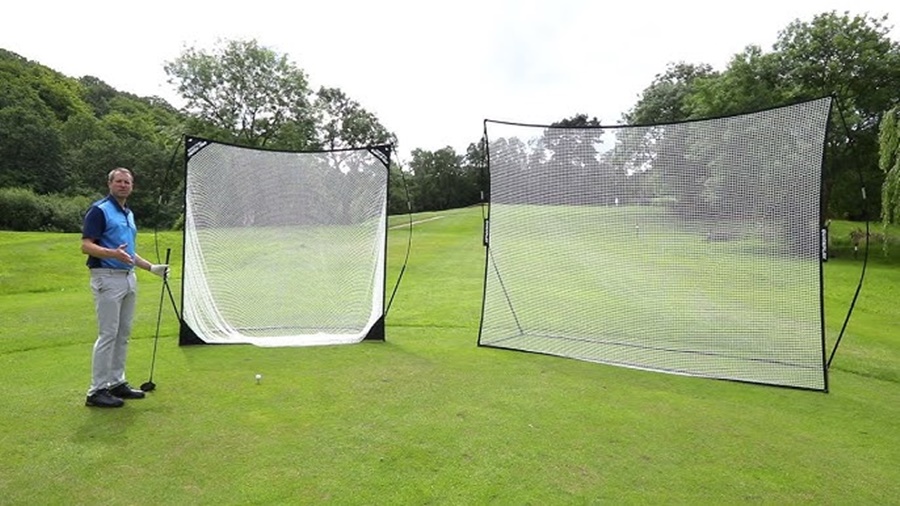
Improving your golf game requires consistent practice, but not every golfer has the same time, budget, or access to training facilities. Two of the most common ways golfers practice are using a golf hitting net at home or visiting a driving range. Both methods have their advantages and limitations, and the best choice often depends on your goals, schedule, and level of experience.
This article explores the differences between golf hitting nets and driving ranges, including their benefits, drawbacks, and which one might be the right option for you.
What Is a Golf Hitting Net?
A golf hitting net is a portable or permanent net system designed to catch golf balls after you strike them. Golfers typically set it up in their backyard, garage, basement, or indoor practice area. The net allows you to practice swings without needing a large field.
Many golfers pair hitting nets with practice mats, launch monitors, or swing analyzers to improve feedback during training.
Benefits of a Golf Hitting Net
1. Convenience and Accessibility
One of the biggest advantages of a hitting net is convenience. You can practice anytime without leaving your home. Whether you have ten minutes or an hour, the setup allows for quick practice sessions.
2. Cost Savings Over Time
While there is an initial cost for purchasing the net and mat, you avoid ongoing driving range fees and golf ball costs. Over time, frequent golfers may save money.
3. Ideal for Repetition and Muscle Memory
Because you can hit balls repeatedly without interruption, hitting nets are excellent for building muscle memory and refining swing mechanics.
4. Weather Independence
Indoor nets allow you to practice regardless of weather conditions. Rain, extreme heat, or cold will not interrupt your training schedule.
5. Privacy
Some golfers feel more comfortable practicing alone rather than at a public range. A hitting net eliminates performance pressure from other players.
Limitations of a Golf Hitting Net
1. Lack of Ball Flight Feedback
The biggest disadvantage is that you cannot see the full ball flight. Without tracking tools, it is difficult to evaluate distance, trajectory, and accuracy.
2. Space Requirements
Although nets require less space than a range, you still need a safe area with enough ceiling height and distance to swing comfortably.
3. Potential Safety Concerns
Improper setup can lead to balls rebounding or missing the net entirely, potentially causing damage or injury.
4. Limited Realistic Experience
A hitting net does not fully simulate real course conditions such as wind, terrain, or target alignment.
What Is a Driving Range?
A driving range is a designated practice facility where golfers hit balls across an open field toward distance markers or targets. Driving ranges are commonly located at golf courses or stand-alone training facilities.
They allow players to practice different clubs, shot shapes, and distances in a realistic outdoor environment.
Benefits of a Driving Range
1. Real Ball Flight Visibility
The primary advantage is seeing the entire ball flight. This helps golfers understand trajectory, carry distance, spin, and shot shape.
2. Target-Based Practice
Most ranges include markers or greens at various distances. This helps improve accuracy, club selection, and distance control.
3. Full Bag Practice
Driving ranges allow you to practice every club, including drivers, irons, and wedges, in a realistic setting.
4. Professional Coaching Opportunities
Many ranges have golf instructors available for lessons, which can accelerate improvement.
5. Practice Variety
Ranges often include additional areas such as putting greens, chipping areas, and bunker practice zones.
Limitations of a Driving Range
1. Ongoing Costs
Driving ranges charge per bucket of balls. Frequent visits can add up over time.
2. Time and Travel
You need to travel to the facility, which may not always fit into a busy schedule.
3. Weather Dependence
Outdoor ranges may close during rain, storms, or extreme heat.
4. Inconsistent Practice Conditions
Range mats and range balls sometimes behave differently from real course conditions.
Skill Development Comparison
Swing Mechanics
Hitting nets are excellent for practicing swing mechanics and repetition. Since you can hit balls continuously, it is easier to focus on technique adjustments.
Driving ranges also help mechanics but offer additional feedback through visible ball flight.
Distance Control
Driving ranges are significantly better for distance control because golfers can see exactly how far each shot travels.
Hitting nets require launch monitors or additional technology to measure distance accurately.
Accuracy and Shot Shaping
Seeing where the ball lands is crucial for improving accuracy. Driving ranges provide clear visual feedback, while hitting nets typically cannot.
Consistency
Hitting nets allow frequent short practice sessions, which can improve consistency over time.
Cost Comparison
Golf Hitting Net
Initial investment may include:
- Hitting net
- Golf mat
- Practice balls
- Optional launch monitor
After purchase, ongoing costs are minimal.
Driving Range
Typical expenses include:
- Bucket of range balls
- Transportation
- Occasional lesson fees
For golfers who practice several times a week, the cumulative cost can become significant.
Space and Setup Considerations
Hitting nets require:
- Safe hitting distance (typically 8–10 feet)
- Adequate ceiling height for full swings
- Proper net installation
Driving ranges eliminate these concerns since they are professionally designed for practice.
However, access to a nearby range can vary depending on location.
Which Option Is Better?
The answer depends on your practice goals and lifestyle.
Choose a golf hitting net if:
- You want convenient daily practice at home
- You are focusing on swing repetition and mechanics
- You prefer lower long-term practice costs
- You have limited time to travel
Choose a driving range if:
- You want to see full ball flight
- You need to work on distance control and shot shaping
- You enjoy practicing in a realistic environment
- You want access to coaching and training facilities
The Best Solution: Using Both
Many serious golfers combine both methods.
For example:
- Use a hitting net for daily swing practice at home.
- Visit the driving range weekly to evaluate ball flight and distances.
This approach provides the convenience of home practice while maintaining the feedback and realism of a driving range.
Conclusion
Both golf hitting nets and driving ranges play valuable roles in improving your golf game. Hitting nets offer unmatched convenience and repetition, while driving ranges provide essential visual feedback and realistic practice conditions.
Rather than choosing one exclusively, many golfers benefit from incorporating both methods into their training routine. By balancing convenience with real-world feedback, you can build a more consistent and effective golf practice strategy.





Leave a Reply