
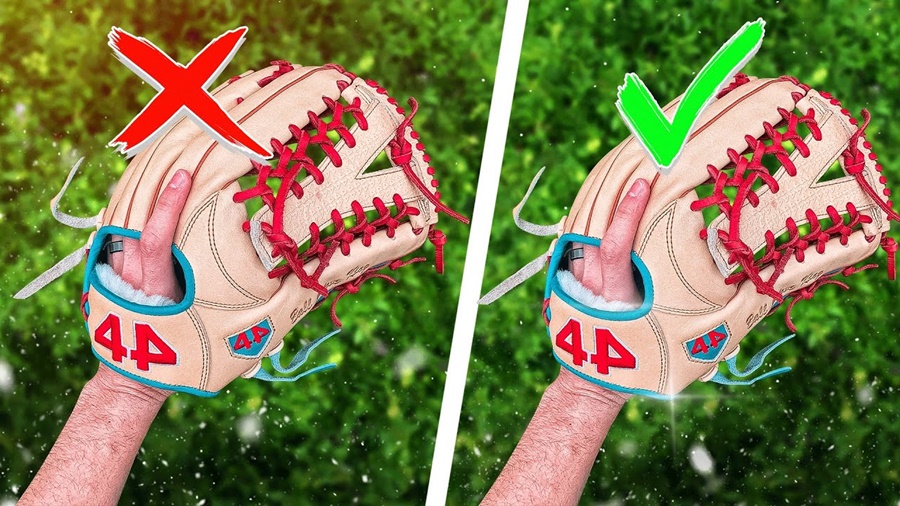
When it comes to baseball, not all gloves are created equal. The differences between infield and outfield gloves are purposeful, designed to match the unique demands of each position. Choosing the right glove can significantly impact your performance, control, and confidence on the field. This article breaks down the key distinctions, helping you understand which glove suits your role best.
1. Purpose and Positioning
The primary difference between infield and outfield gloves comes down to how they are used during play.
Infield gloves are built for quick reactions. Infielders—such as second basemen, shortstops, and third basemen—need to field ground balls, make fast transfers, and throw quickly. Speed and control are everything.
Outfield gloves, on the other hand, are designed for range and reach. Outfielders deal with fly balls, line drives, and deep hits, so their gloves prioritize catching ability and coverage over quick ball transfer.
2. Glove Size and Length
One of the most noticeable differences is size.
- Infield gloves are typically smaller, ranging from about 11 to 12 inches.
This compact size allows for faster ball retrieval and easier transfers to the throwing hand. - Outfield gloves are larger, usually between 12.5 and 13 inches.
The added length helps outfielders extend their reach and secure balls that might otherwise be out of range.
3. Webbing Design
The webbing—the part between the thumb and index finger—also varies significantly.
- Infield gloves often feature open web designs (like I-web or H-web).
These allow dirt and debris to fall through, which is especially helpful when fielding ground balls. - Outfield gloves usually have closed or deeper webbing (such as trapeze or modified trapeze).
This creates a larger pocket and better support for catching high-speed fly balls.
4. Pocket Depth
Pocket depth is crucial for how the ball is handled.
- Infield gloves have shallow pockets.
This makes it easier to quickly grab the ball and transition into a throw—essential for turning double plays or making fast outs. - Outfield gloves feature deep pockets.
These help secure the ball during catches, especially when running or diving.
5. Flexibility and Break-In
- Infield gloves are generally more flexible and easier to break in.
Players need them to respond quickly and allow for precise ball control. - Outfield gloves tend to be stiffer initially.
This added structure helps maintain a deep pocket and provides stability when catching powerful hits.
6. Control vs Reach
This is the fundamental trade-off:
- Infield gloves prioritize control and speed.
- Outfield gloves prioritize reach and security.
Trying to use one type in the other position can put you at a disadvantage. For example, using an outfield glove in the infield may slow your throw, while using an infield glove in the outfield could make it harder to catch deep fly balls.
7. Position-Specific Recommendations
- Second Base / Shortstop: Smaller glove (11–11.5 inches) for quick transfers
- Third Base: Slightly larger infield glove (11.5–12 inches) for handling hard-hit balls
- Outfield (Left, Center, Right): Larger glove (12.5–13 inches) for maximum reach and secure catches
8. Can You Use One Glove for Both?
While it’s possible especially for casual or beginner players it’s not ideal. A “utility glove” around 12 inches can serve as a compromise, but it won’t excel in either role. As players develop, most switch to position-specific gloves to improve performance.
Conclusion
Infield and outfield gloves are designed with distinct purposes in mind. Infield gloves are compact, shallow, and built for speed and precision, while outfield gloves are larger, deeper, and made for reach and secure catching. Understanding these differences helps players choose the right equipment, ultimately improving their effectiveness on the field.
If you’re serious about baseball, investing in the correct glove for your position isn’t just a preference it’s a competitive advantage.

Leave a Reply