
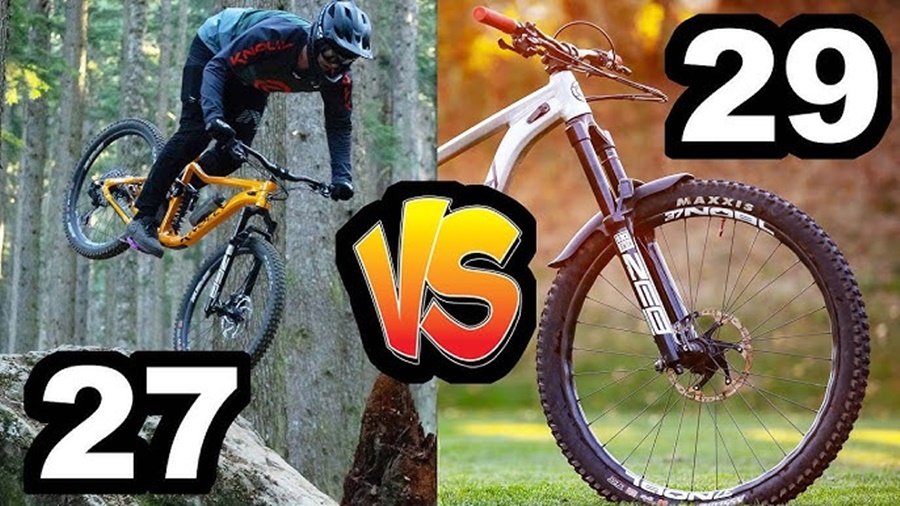
Mountain biking has evolved dramatically over the years, and one of the biggest debates among riders is the battle between 29-inch wheels and 27.5-inch wheels. Both wheel sizes offer unique advantages and disadvantages, and choosing the right one can significantly affect your riding experience, speed, comfort, and confidence on the trail.
Whether you are a beginner buying your first mountain bike or an experienced rider looking to upgrade, understanding the differences between 29ers and 27.5 bikes is essential. This article explores everything you need to know about both wheel sizes, including performance, handling, terrain suitability, climbing ability, and rider preferences.
Understanding Wheel Sizes
The terms “29er” and “27.5” refer to the diameter of the bike wheels.
- 29er: Uses 29-inch wheels
- 27.5: Uses 27.5-inch wheels (also called 650b)
Although the numerical difference appears small, the riding characteristics between the two can feel dramatically different on the trail.
History of Mountain Bike Wheel Sizes
For many years, 26-inch wheels dominated mountain biking. They were lightweight, agile, and ideal for technical trails. However, as mountain biking technology advanced, larger wheel sizes became popular.
- 29ers gained attention for their speed and rollover capability.
- 27.5 bikes emerged as a compromise between the agility of 26-inch wheels and the stability of 29ers.
Today, 29ers and 27.5 bikes are the two most common wheel sizes in modern mountain biking.
Advantages of 29er Mountain Bikes
1. Better Rolling Efficiency
One of the biggest strengths of a 29er is its ability to roll over obstacles more smoothly.
Large wheels:
- Roll over rocks and roots easier
- Maintain momentum better
- Reduce trail chatter
- Improve efficiency on rough terrain
This makes 29ers especially effective on cross-country and endurance rides.
2. Increased Stability
Because of the larger wheel diameter, 29ers provide greater stability at high speeds.
Benefits include:
- More confidence on descents
- Better traction
- Smoother ride quality
- Improved straight-line control
Riders often feel more planted and secure on technical trails.
3. Improved Traction
Larger wheels create a bigger tire contact patch with the ground.
This means:
- Better grip while climbing
- Improved cornering traction
- More control in loose conditions
This advantage becomes noticeable on steep climbs and rough surfaces.
4. Faster on Open Terrain
29ers excel on:
- Long trails
- Fire roads
- Cross-country courses
- Marathon races
Their momentum-carrying ability helps maintain speed with less effort.
Disadvantages of 29er Mountain Bikes
1. Less Agile Handling
Because the wheels are larger:
- Turning can feel slower
- Tight corners require more effort
- Quick directional changes are harder
Some riders describe 29ers as less playful than smaller-wheel bikes.
2. Heavier Weight
Larger wheels and tires generally weigh more.
This can affect:
- Acceleration
- Jumping performance
- Technical maneuverability
Modern bike technology has reduced this issue, but it still exists.
3. Fit Challenges for Shorter Riders
Smaller riders may struggle with:
- Stand-over height
- Frame sizing
- Overall bike feel
Although manufacturers now design better small-frame 29ers, some shorter riders still prefer 27.5 bikes.
Advantages of 27.5 Mountain Bikes
1. Agile and Playful Handling
27.5 bikes are known for their responsiveness.
They are:
- Easier to corner
- Faster to maneuver
- More playful on trails
- Better for technical riding
This makes them ideal for riders who enjoy dynamic trail riding.
2. Better for Jumps and Tricks
The smaller wheel size:
- Accelerates quickly
- Feels lighter in the air
- Makes manuals and bunny hops easier
Freeride and bike park riders often favor 27.5 wheels for this reason.
3. Easier for Smaller Riders
Riders with shorter heights may find 27.5 bikes:
- More comfortable
- Easier to handle
- Better proportioned
The geometry often feels more natural for compact body sizes.
4. Strong Technical Performance
On tight, technical trails, 27.5 bikes can outperform larger-wheel bikes.
They handle well in:
- Narrow switchbacks
- Technical descents
- Dense forest trails
- Steep terrain
Disadvantages of 27.5 Mountain Bikes
1. Reduced Momentum
Smaller wheels lose speed faster than 29ers.
This means:
- More pedaling effort
- Less efficiency on long rides
- Slower rolling over rough terrain
2. Slightly Less Stability
Compared to 29ers:
- High-speed stability is lower
- Rough terrain feels harsher
- Traction may be reduced
Aggressive riders may notice this difference on fast descents.
3. Not as Efficient for Cross-Country Racing
While 27.5 bikes are capable racers, most modern cross-country competitors now prefer 29ers because of their efficiency and speed.
Climbing Comparison
29er Climbing Performance
29ers generally climb better because:
- Larger wheels maintain momentum
- Better traction reduces wheel slip
- Obstacles feel smaller
Long climbs become more manageable and energy-efficient.
27.5 Climbing Performance
27.5 bikes can still climb extremely well, especially on technical climbs requiring:
- Quick body movements
- Sharp steering corrections
- Fast accelerations
However, they may require slightly more rider effort over long distances.
Descending Comparison
29ers on Descents
Advantages:
- Stable at high speed
- Smooth over rough terrain
- Confidence-inspiring
Best for:
- Fast downhill sections
- Rocky trails
- Enduro racing
27.5 on Descents
Advantages:
- More maneuverable
- Easier to flick around corners
- Better for playful riding
Best for:
- Tight trails
- Bike parks
- Technical jumps
Which Wheel Size Is Faster?
On average:
- 29ers are faster on most trails
- 27.5 bikes accelerate quicker
29ers maintain speed better over long distances, while 27.5 bikes feel quicker in short bursts.
For racing:
- Cross-country racers often choose 29ers
- Slopestyle and freeride riders often choose 27.5
Rider Height Considerations
Best for Taller Riders
29ers usually suit:
- Riders over 5’9″ (175 cm)
- Long-legged riders
- Riders seeking stability
Best for Shorter Riders
27.5 bikes often suit:
- Riders under 5’7″ (170 cm)
- Riders wanting agility
- Beginners seeking easier handling
That said, modern geometry allows riders of nearly all heights to use either wheel size comfortably.
Terrain Suitability
| Terrain Type | Better Choice |
|---|---|
| Cross-country trails | 29er |
| Technical singletrack | 27.5 |
| Rocky terrain | 29er |
| Bike parks | 27.5 |
| Flow trails | 27.5 |
| Long endurance rides | 29er |
| Steep climbs | 29er |
| Jumps and tricks | 27.5 |
Mixed Wheel Setups (Mullet Bikes)
Some modern mountain bikes now combine both wheel sizes.
This setup is called a:
- Mullet bike
- 29-inch front wheel
- 27.5-inch rear wheel
Benefits include:
- Front-end stability
- Rear-wheel agility
- Better cornering
- Improved descending confidence
Mullet setups are becoming increasingly popular in enduro and downhill riding.
Which Wheel Size Is Better for Beginners?
Both are excellent choices, but the best option depends on riding style.
Choose a 29er if you:
- Want stability and confidence
- Ride long distances
- Prefer smoother rolling
- Focus on climbing efficiency
Choose a 27.5 if you:
- Prefer playful handling
- Ride technical trails
- Enjoy jumps and tricks
- Want a more nimble bike
The Role of Bike Geometry
Wheel size is only one factor in mountain bike performance.
Modern geometry affects:
- Stability
- Reach
- Steering
- Suspension feel
A well-designed 27.5 bike may outperform a poorly designed 29er and vice versa.
Always consider:
- Suspension travel
- Frame geometry
- Tire choice
- Riding style
Cost Differences
Historically, 29ers were more expensive, but today pricing is very similar.
However:
- 29-inch tires and wheels can sometimes cost slightly more
- Replacement parts may weigh more
- Availability depends on the market
Professional Rider Preferences
Different disciplines favor different wheel sizes.
29er Dominance
Popular in:
- Cross-country racing
- Marathon racing
- Modern enduro racing
27.5 Popularity
Still preferred in:
- Freeride
- Dirt jumping
- Slopestyle
- Some downhill setups
Conclusion
Choosing between a 29er and a 27.5 mountain bike ultimately comes down to your riding style, terrain, and personal preference. A 29er offers better speed, stability, traction, and efficiency, making it ideal for long rides, rough trails, and cross-country riding. On the other hand, a 27.5 bike provides quicker handling, better maneuverability, and a more playful feel, which is perfect for technical trails, jumps, and aggressive riding.
Neither wheel size is universally better than the other. Riders who prioritize smooth rolling and confidence at high speeds may prefer a 29er, while those who enjoy agility and responsive handling may find a 27.5 bike more enjoyable. Modern mountain bikes are highly advanced, and both wheel sizes are capable of delivering excellent performance on the trail.
The best way to make the right decision is to test ride both options and choose the bike that feels most comfortable and suits your riding goals. In the end, the right mountain bike is the one that gives you the most confidence, control, and enjoyment on every ride.





Leave a Reply