
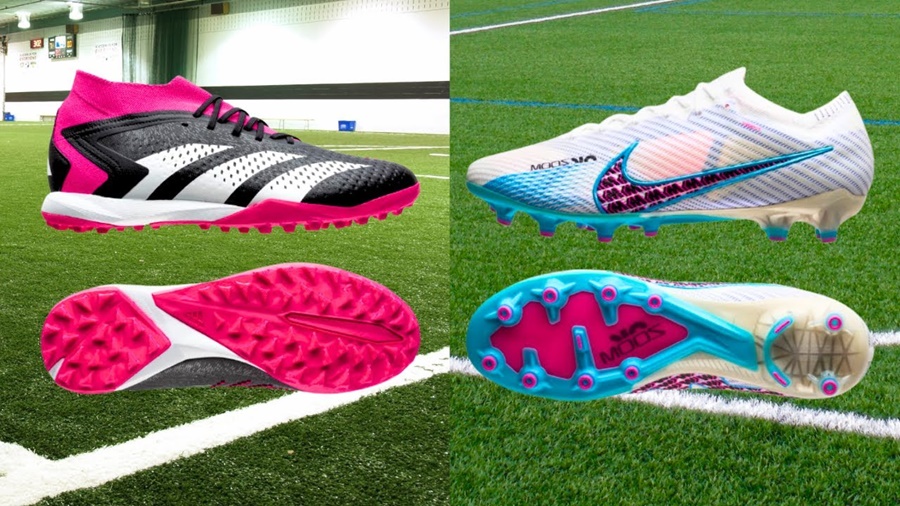
Selecting the right soccer shoes is one of the most important decisions for any player. The type of surface you play on significantly affects your performance, comfort, and safety. Among the most common options are Artificial Ground (AG) shoes and Turf (TF) soccer shoes. While they may look similar at first glance, they are designed for different playing conditions and offer distinct advantages.
This article explores the differences between AG and Turf soccer shoes, helping players make an informed choice based on their playing environment and style.
Understanding Artificial Ground (AG) Soccer Shoes
Artificial Ground shoes are specifically designed for modern artificial grass fields, often referred to as third-generation synthetic turf. These surfaces feature longer synthetic grass blades and are usually filled with rubber granules or sand to mimic natural grass.
AG shoes feature multiple short, hollow, or conical studs distributed evenly across the soleplate. This design provides excellent traction while reducing pressure on the feet and joints.
Key Features of AG Shoes
- Designed for artificial grass pitches.
- Multiple short studs for enhanced grip.
- Even stud distribution reduces injury risk.
- Better shock absorption on synthetic surfaces.
- Suitable for competitive and regular outdoor play.
Advantages of AG Shoes
Improved Traction
AG shoes provide excellent grip on artificial grass without creating excessive resistance. This allows players to accelerate, stop, and change direction efficiently.
Enhanced Comfort
The stud configuration distributes pressure evenly across the foot, making AG shoes more comfortable during long matches and training sessions.
Reduced Injury Risk
Because the studs are shorter and more numerous, AG shoes decrease the likelihood of the foot getting stuck in the surface, helping to reduce stress on ankles and knees.
Greater Durability
AG shoes are built to withstand the abrasive nature of artificial grass, making them a durable choice for players who frequently train on synthetic fields.
Disadvantages of AG Shoes
- Not ideal for hard concrete or indoor surfaces.
- Can wear down quickly when used on unsuitable terrain.
- Generally more expensive than turf shoes.
Understanding Turf (TF) Soccer Shoes
Turf soccer shoes are designed for older artificial turf fields, hard ground surfaces, and small-sided soccer courts. Instead of traditional studs, they feature numerous small rubber nubs across the outsole.
These shoes prioritize stability and comfort over aggressive traction, making them popular for recreational players and training sessions.
Key Features of Turf Shoes
- Rubber outsole with many small nubs.
- Excellent stability on hard surfaces.
- Comfortable for extended use.
- Versatile across multiple playing environments.
Advantages of Turf Shoes
Excellent Stability
The flat outsole with small rubber studs provides consistent contact with the ground, helping players maintain balance and control.
Versatility
Turf shoes can be used on various surfaces, including:
- Artificial turf fields
- Hard ground pitches
- Outdoor soccer courts
- Some indoor facilities
Increased Comfort
Many players find turf shoes more comfortable because they distribute body weight evenly and create less pressure on specific areas of the foot.
Better for Training
Turf shoes are often preferred for practice sessions, coaching activities, and casual games where maximum traction is not required.
Disadvantages of Turf Shoes
- Less grip on modern artificial grass fields.
- Reduced performance during quick directional changes.
- Not suitable for wet natural grass surfaces.
AG vs Turf Soccer Shoes: A Detailed Comparison
| Feature | AG Shoes | Turf Shoes |
|---|---|---|
| Surface Type | Modern artificial grass | Turf fields and hard surfaces |
| Traction | High | Moderate |
| Stability | Good | Excellent |
| Speed Performance | Excellent | Good |
| Comfort | Very Good | Excellent |
| Injury Prevention | High on AG surfaces | High on hard surfaces |
| Durability | High on artificial grass | High on turf and hard courts |
| Best For | Competitive matches | Training and recreational play |
Which Shoe Provides Better Performance?
For players competing on modern artificial grass fields, AG shoes generally deliver superior performance. Their stud pattern offers better grip, faster acceleration, and improved agility.
On the other hand, players who participate in small-sided games, training sessions, or play on older turf surfaces may benefit more from turf shoes due to their stability and comfort.
Injury Considerations
Using the wrong shoe on the wrong surface can increase the risk of injury.
AG shoes help reduce rotational stress on artificial grass, lowering the risk of ankle and knee injuries. Turf shoes, meanwhile, provide a stable platform on hard surfaces and reduce foot fatigue.
Players should always match their footwear to the playing surface whenever possible.
Which Shoe Should You Choose?
Choose AG Shoes If:
- You regularly play on modern artificial grass fields.
- You need maximum traction and agility.
- You participate in competitive matches.
- You want a shoe specifically designed for synthetic grass.
Choose Turf Shoes If:
- You play on older turf fields or hard courts.
- You primarily train rather than compete.
- Comfort and versatility are your priorities.
- You play small-sided games such as 5-a-side or 7-a-side soccer.
Conclusion
Both Artificial Ground (AG) and Turf soccer shoes serve important roles in modern soccer. AG shoes are the best choice for players competing on contemporary artificial grass surfaces, offering superior traction, performance, and safety. Turf shoes, meanwhile, provide exceptional comfort, stability, and versatility, making them ideal for training sessions and hard-surface play.
Ultimately, the best option depends on the type of field you use most often. Choosing footwear designed for your playing surface will improve performance, increase comfort, and help reduce the risk of injury.
Leave a Reply