
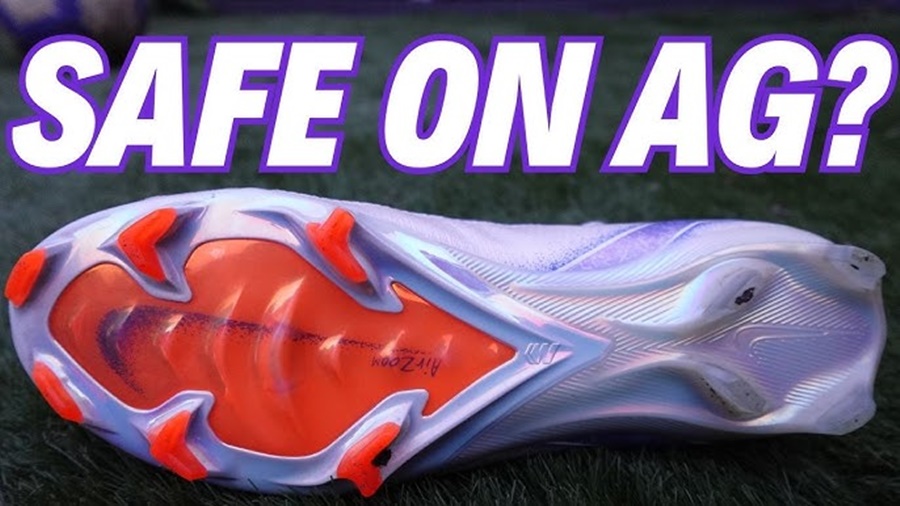
Choosing the right soccer cleats can significantly impact your performance, comfort, and safety on the field. Among the many options available, Firm Ground (FG) and Artificial Ground (AG) soccer cleats are two of the most popular types. While they may appear similar at first glance, they are designed for different playing surfaces and conditions.
Understanding the differences between FG and AG cleats will help players make an informed decision and avoid unnecessary injuries or equipment damage.
What Are Firm Ground (FG) Soccer Cleats?
Firm Ground (FG) soccer cleats are designed primarily for natural grass fields that are dry or slightly damp. They are the most common type of soccer cleat and are often considered the standard option for outdoor soccer.
FG cleats feature molded studs that provide traction and stability on natural grass surfaces. The studs are usually bladed, conical, or a combination of both, allowing players to accelerate, stop, and change direction efficiently.
Key Features of FG Cleats
- Designed for natural grass fields
- Typically have 10–14 molded studs
- Studs are longer than AG studs
- Provide excellent grip on firm natural surfaces
- Lightweight and versatile
Advantages of FG Cleats
Superior Traction on Natural Grass
FG cleats are optimized to penetrate natural grass and soil, providing strong grip and stability during play.
Better Acceleration
The stud configuration allows players to push off the ground efficiently, enhancing speed and explosive movements.
Widely Available
Most soccer cleat models are released in FG versions, offering players a wide range of choices.
Disadvantages of FG Cleats
Not Ideal for Artificial Turf
Using FG cleats on artificial grass can create excessive pressure on the feet and increase the risk of injuries.
Faster Wear on Synthetic Surfaces
The studs can wear down more quickly when used regularly on artificial fields.
What Are Artificial Ground (AG) Soccer Cleats?
Artificial Ground (AG) soccer cleats are specifically engineered for modern synthetic turf fields. Artificial grass is generally firmer and less forgiving than natural grass, requiring a different stud design.
AG cleats feature a larger number of shorter studs that distribute pressure more evenly across the foot. This design helps improve comfort and reduces the risk of joint stress during matches and training sessions.
Key Features of AG Cleats
- Designed for artificial turf surfaces
- More studs than FG cleats
- Shorter and less aggressive stud pattern
- Enhanced pressure distribution
- Increased durability on synthetic fields
Advantages of AG Cleats
Improved Comfort
The additional studs help spread body weight more evenly, reducing pressure points on the feet.
Reduced Injury Risk
AG cleats are designed to minimize excessive traction that can cause ankle, knee, and ligament injuries on artificial surfaces.
Greater Durability
The outsole materials and stud configuration are built to withstand the abrasive nature of artificial turf.
Disadvantages of AG Cleats
Less Effective on Natural Grass
AG cleats may not provide the same level of grip on soft or natural grass fields.
Limited Availability
Some brands offer fewer AG-specific models compared to FG versions.
Main Differences Between FG and AG Cleats
| Feature | FG Cleats | AG Cleats |
|---|---|---|
| Playing Surface | Natural grass | Artificial turf |
| Stud Length | Longer | Shorter |
| Number of Studs | Fewer | More |
| Traction Level | More aggressive | Moderate |
| Comfort on Turf | Lower | Higher |
| Durability on Turf | Moderate | High |
| Injury Prevention on Turf | Lower | Higher |
Can You Use FG Cleats on Artificial Grass?
Many players use FG cleats on artificial grass, especially when they do not own a separate pair of AG cleats. While this is possible on some newer FG models, it is generally not recommended for frequent use.
The longer studs on FG cleats can grip artificial turf too aggressively. This may increase stress on the knees and ankles during quick turns and sudden stops. Additionally, FG studs tend to wear down faster on synthetic surfaces.
Occasional use is usually acceptable, but players who regularly compete on artificial turf should consider AG cleats for better safety and comfort.
Can You Use AG Cleats on Natural Grass?
AG cleats can be used on firm natural grass fields, but performance may vary depending on field conditions.
Because AG studs are shorter, they may not penetrate natural grass as effectively as FG studs. On dry and hard natural fields, AG cleats can perform reasonably well. However, on softer grass surfaces, players may experience reduced traction.
Which Type Is Safer?
For the surface they are designed for, both FG and AG cleats are safe.
However, when comparing safety on artificial turf, AG cleats generally have the advantage. Their stud pattern reduces rotational resistance, lowering the risk of injuries related to sudden twisting movements.
Players who spend most of their time on synthetic fields often benefit from the additional comfort and injury protection offered by AG models.
Which Cleats Should You Buy?
Choose FG Cleats If:
- You mainly play on natural grass.
- Your league uses outdoor grass fields.
- You want the most versatile option for traditional soccer surfaces.
- You prioritize maximum traction on natural terrain.
Choose AG Cleats If:
- You regularly play on artificial turf.
- Most of your training sessions are on synthetic fields.
- You want enhanced comfort and reduced joint stress.
- You need a more durable outsole for turf use.
Conclusion
The choice between Firm Ground (FG) and Artificial Ground (AG) soccer cleats depends largely on the type of field you play on most often. FG cleats excel on natural grass by providing strong traction and responsiveness, while AG cleats are specifically engineered to deliver comfort, durability, and safety on artificial turf.
If you primarily play on natural grass, FG cleats are the better option. If artificial turf is your regular playing surface, AG cleats are the smarter and safer investment. Selecting the correct cleat for the field not only improves performance but also helps reduce the risk of injury and extends the lifespan of your footwear.


Leave a Reply